I had a lesion. Wrong - it was Stage 3 cancer.
This blog is being created for you—wherever you are—because Penile Squamous Cell Carcinoma (PSCC) is rare, and rarity leads to delay. PSCC has no borders. It affects men, partners, families, and caregivers everywhere.
Many people have never heard of PSCC. Early signs are often dismissed as irritation, infection, or aging. Symptoms involve intimate anatomy, making conversations with doctors difficult. Some clinicians may never encounter PSCC in their careers and may not pursue early biopsy. Healthcare Systems can cause delays—appointments, referrals, cancellations—adding weeks or months while cancer spreads. And fear, embarrassment, or uncertainty can keep people from seeking care at all.
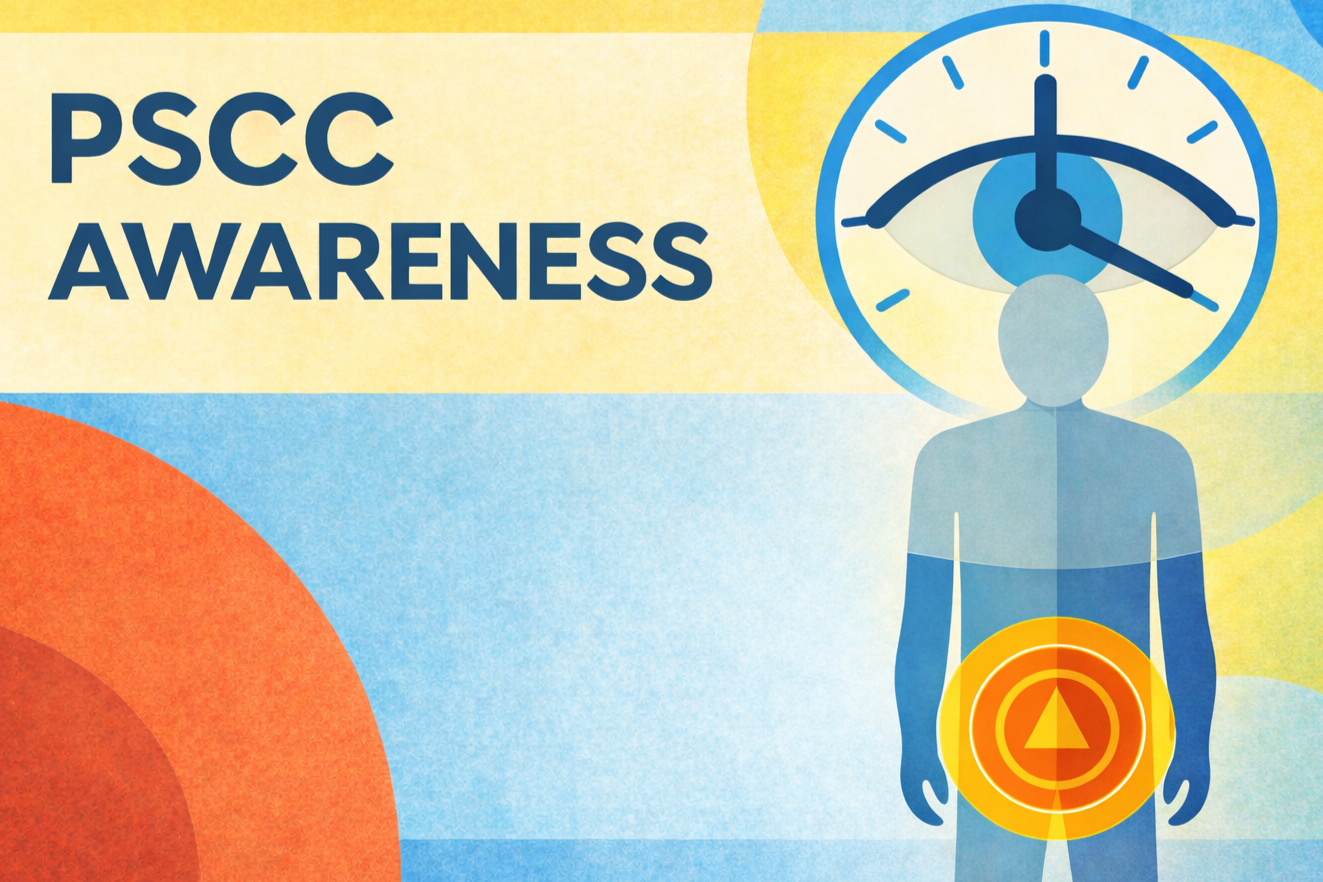
PSCC Awareness
For me, delay was not theoretical.
For months, my concerns were treated as non-urgent within my regional healthcare system. I received two formal letters stating I had no immediate medical need to seek out-of-network care to save my life. My assignment to a urologist took months. A biopsy was ordered, then cancelled. No meaningful diagnostic steps were taken while visible and painful changes were happening quickly.
During that time, PSCC was running a sprint inside me.
Healthcare systems move in weeks and months. Aggressive cancer does not. Time matters with PSCC, and I never heard the words “Stage 1” or “Stage 2.” By the time my diagnosis was finally made, my cancer was already Stage 3b.
Everything changed when I transferred my care to a large California university-based healthcare system. There, urgency replaced delay. A biopsy was ordered. A diagnosis was made: Penile Squamous Cell Carcinoma, Stage 3b.
My care was taken on urgently by the University of California, San Diego. While no system is perfect, the speed, seriousness, and coordination of care there saved my life. By then, PSCC had already spread to my inguinal lymph nodes—but timely action made the difference in saving my life.
Certain words carry weight:
Penis.
Penile.
Biopsy.
Metastasize.
Cancer. Radiation. Chemotherapy.
Heard one at a time, they can feel awkward or frightening. For me, I wasn’t given time to feel embarrassed. My life accelerated suddenly into a race through uncertainty, darkness, and fog.
I’m sharing this not to assign blame, but to make one point clear: when a cancer is rare, it can be overlooked—and results-driven self-advocacy becomes critical.
This blog exists to help reduce delay—for you or for someone you love. A diagnosis is frightening, but what follows can bring frustration, confusion, and unexpected challenges. My goal is to help surface those issues early, so you can plan more effectively. Getting your diagnosis promptly is critical, and then everything you do next shapes your outcome.
Through these posts, I will share my experience with PSCC, surgery, chemotherapy, and life after treatment—not to provide medical advice, and not to document every detail, but to offer context. I focus on process, not spectacle.
In upcoming entries, I will explore:
How my diagnosis was finally made
How concerns (mine, caregivers) were raised—and sometimes missed
How family and doctors helped shape initial decisions, and how we refined them later
How treatment unfolded
How recovery continues into survivorship
I will share what helped, what was unclear, and what I wish I had known earlier.
This blog is also for caregivers. Partners, family members, and loved ones often carry uncertainty quietly while trying to provide support. I will share examples of how conversations unfolded, where their advocacy mattered most, and how navigating cancer is rarely a solo effort. Diagnosis is the first difficulty, more will follow—which I called ‘the roller coaster.’ Recognizing there will be ups and downs can help you lean into things, one day at a time.
PSCC awareness depends on attention—from patients, caregivers, and clinicians alike. Good outcomes depend on early recognition, timely diagnosis, and the confidence to speak up when something doesn’t feel right.
If this blog helps even one person seek care sooner, ask a clearer question, or feel more prepared to advocate for themselves or someone they love, then sharing my journey has served its purpose.