A Cancer Journey Starts With Questions.
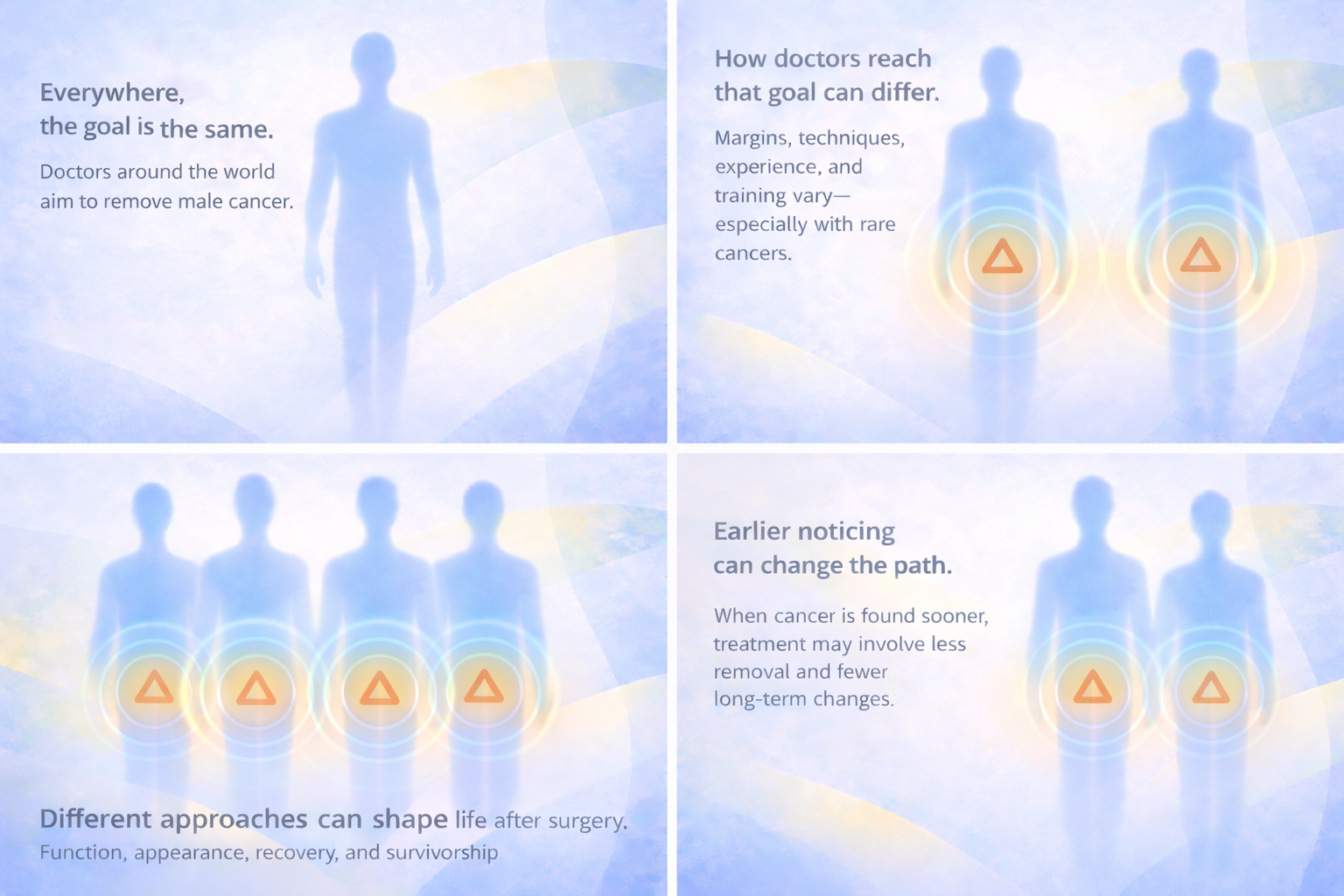
I have learned cancer treatment is not delivered the same way everywhere. Different doctors may recommend different treatments based on their training, experience, available resources, local guidelines, and the number of similar cases they have treated before. These differences can exist between countries, between hospitals, and even between doctors within the same clinic. While the goal of treatment is the same—to remove or control the cancer—the path to that goal can vary in ways that affect recovery, function, appearance, and long-term quality of life. Because of these variations, patients and their caretakers should play an important, proactive role in their care by asking informed questions before treatment begins.
Asking questions is not challenging a doctor’s expertise; it is part of shared decision-making and good medicine. I tell my doctors “I am the Chief Medical Officer of Me.” I let them know I rely on their experience, and appreciate them working in a collaborative way with me. They get a vote, but I get 1.1 votes after they explain things to me. The more clearly I understand my options, the better prepared I am for both treatment and life afterward.
There were many things I was not prepared for during my treatment and into my ongoing recovery, and those are some of the reasons I am sharing this blog for you to learn from.
Here is a basic starting point, a list I wish someone would have handed me to help me ask the right questions early on.
Treatment Decision Checklist
For Men and Caretakers
Use this checklist before treatment begins. You do not need to ask everything at once.
Understanding the Diagnosis
☐ What type of cancer is this?
☐ What grade and stage is it?
☐ How certain is the diagnosis?
☐ What information is still unknown?
Treatment Options
☐ What treatment options exist for my diagnosis?
☐ Why is this approach being recommended over others?
☐ Are there less invasive or organ-sparing options?
☐ What options might be used in other hospitals or countries?
Surgical or Procedural Details
☐ How much tissue is expected to be removed?
☐ How are surgical margins determined?
☐ What decisions may be made during surgery that affect outcomes?
☐ Do all doctors in this facility or hospital system use the same exact surgical procedures?
☐ Do you have patient information (in the same facility that I will be in) regarding post operative infections such as Staphylococcus? How prevalent is it, what should I look for post op?
☐ Is reconstruction considered as part of treatment?
☐ Will I have drains, or a catheter or other things I should learn about? Who will teach me how to maintain things like drains? Who will give me contact information for after hours issues?
Experience and Specialization
☐ How often do you treat this type of cancer?
☐ Is this a rare cancer in your practice?
☐ Would referral to a higher-volume center be appropriate?
☐ Do you have recommendations about setting up a second opinion?
☐ Do you have an Oncology Social Worker? A Patient Advocate? Ombudsmen?
Functional Outcomes
☐ How might urination change?
☐ How might sexual function or sensation change?
☐ What daily life adjustments are common after treatment?
Appearance and Healing
☐ What will the area look like immediately after treatment?
☐ How does appearance usually change over time?
☐ What scarring should I expect?
Recovery and Follow-Up
☐ What is the typical recovery timeline?
☐ What complications should I watch for?
☐ How often will follow-up appointments be needed?
Alternatives and Timing
☐ What are the risks of waiting or delaying treatment?
☐ Would a second opinion change the plan or timing?
☐ Are there international or alternative guidelines relevant to my case?
Emotional and Practical Support
☐ What emotional reactions are common after treatment?
☐ Are mental health or peer support resources available?
☐ Are there resources for partners or caretakers?
Final Reflection
☐ Do I understand the tradeoffs between options?
☐ Do I feel comfortable with the plan?
☐ What questions do I still need answered?
Reminder:
Asking questions is part of good care.
Consider starting a journal and/or diagnoses/treatment notebook to manage your journey better.
Different doctors may recommend different approaches, and understanding those differences helps us take part in decisions about our bodies and lives.
Ask yourself: Do I know the best hospital or doctor in my country for my cancer? In another country?
Do I need to learn how to get a second opinion prior to treatment, especially when it may take time to set it up?