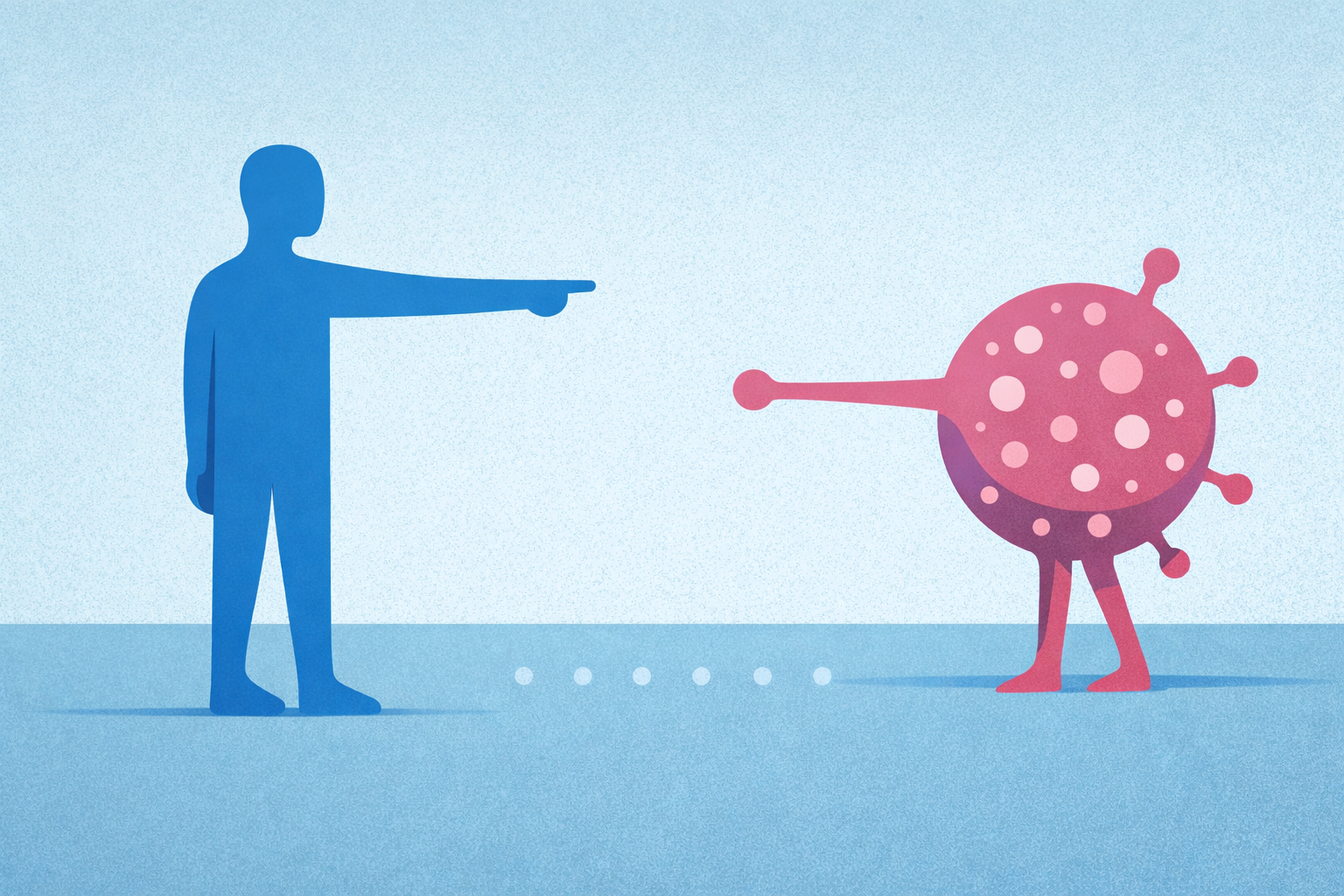
A duel
Dear Friends,
We can each look into the same glass sphere at the same moment and see something completely different.
Tonight, I am turning that sphere toward my own journey.
After reviewing the classic steps of a duel, I realized these steps offer more than a historical framework. They offer me a writing device, and maybe more importantly, a way to process what has happened to me this far into my journey. By choosing where I look into the sphere, I am building my own roller coaster. I am taking back some of the agency cancer tried to steal.
Get ready, cancer. The ground you picked is gonna’ shake, rattle, and roll.
In 2024, cancer chose the first field. It chose the high ground. I learned that lesson long ago from my U.S. Marine friends: go high.So maybe one of the tools of recovery is this — changing the ground, changing the angle, changing the story I tell myself about where the fight began and where it leads next.
Earlier today I reviewed the classic rules of a duel:
The insult or offense
One man believes his honor has been injured.
Demand for satisfaction
He asks for an apology, retraction, or other satisfaction.
The challenge
If that fails, a formal challenge is issued.
The seconds are appointed
Each man chooses a trusted representative, called a second.
The seconds negotiate
They first try to prevent the duel by arranging an apology or settlement.
Terms are set
If no settlement is reached, the seconds agree on weapon, place, time, distance, and rules of engagement.
The principals meet on the field
The two duelists arrive, usually with their seconds and sometimes a surgeon.
Final chance for reconciliation
Before violence begins, there is often one last chance to apologize.
The duel begins
With swords or pistols, according to the agreed rules.
Exchange or exchanges
Sometimes one round is enough; sometimes it continues until first blood, incapacitation, missed shots, or satisfaction is judged to have been met.
The duel ends
It ends by wound, death, apology, exhaustion of terms, or the seconds declaring honor satisfied.
Aftermath
The wounded are treated, and the surviving parties leave — often with legal and social consequences.
With the rules reviewed, I can use this structure to look back at my own field.
Your insult and offense
I believe my body, soul, time, privacy, energy, and relationships were threatened, and that personal injury had already begun.
My demand for satisfaction
I asked cancer, in all forms — local or metastasized — to cease and desist.
Doctors wanted you to be something smaller. A rash. A cyst. Something that would yield to creams and ointments. While most had never seen you before, some had at least read about you in the archives of medical school. These doctors, randomly assigned from within my network, became my advisors after weeks and months of waiting just to confer with them.
The challenge
Doctors said, “This could be a cyst or an infection that will clear up.”
But I am the Chief Medical Officer of Me, and I believed your cloak hid carcinogenic roots.
You persisted.
So I challenged you by seeking new health insurance, new advisors, and new, sharper steel to perform a biopsy and limited surgery.
I CHALLENGE YOU TO COME OUT AND BE IDENTIFIED OVER ON STAGE THREE!
Our seconds are appointed
My first second was a urologist who advised me that you were what you claimed to be: a cyst or a rash.
Then my second withdrew and moved to another field.
After many months, and after changing my insurance, I appointed new advisors from UCSD Oncology — randomly selected for me instead of the department head I had tried to get.
Meanwhile, you fortified your ground.
You consumed sugars.
You consumed my time.
You consumed my sanity.
And your pace increased.
Our seconds don’t negotiate
My seconds believed they knew you.
Before taking up sharp steel to unmask your darker identity, they chose to advise me first. They told me, “It is not good,” and that if I did not meet you on the field, I would have less than six months to live.
That was not negotiation.
That was presented to me by my field surgeon, I had no control…
Terms are set
No settlement is reached, except that we will fight.
Our seconds agree on the following:
Weapons
You choose rapid growth and metastasis.
I choose exploratory surgery and lymph node resection.
My field surgeon refused my request for those resections and does his own thing.
You persuaded my field surgeon to select the grounds. His resection decision was made: we will meet in the basement of the KOP building — a field I rejected the day before our duel.
Still, the terms held.
We agreed to duel ASAP.
We agreed to meet in a surgical setting, or so I thought.
I would take a field hospital tent for my quarters before leaving the next day, or so I thought.
The rules of engagement would be provided by my insurance company.
We would arrive on the field, in the KOP basement, with our seconds and the field surgeon.
Final chance for reconciliation
Before violence begins, there is often one last chance to apologize.
You did not apologize.
Our duel begins
The field surgeon begins with “non-invasive” steel weapons and a camera to find you inside me. After 16 “non-invasive incisions I can’t feel my anything below my waste, down to my knees. I think I saw that in a movie about a Python named Monty.
You get first blood.
Exchange or exchanges
You win the first round as the field hospital bandages the half of my private part that you were unable to sever.
F U, my unworthy opponent, F U.
I was told to confer with the field surgeon in two weeks, and you know what that means. You may have gotten a piece of me, but I am free of you and I HAVE WON.
(In a bad French voice: “Two weeks later…”)
It has been two weeks since my partial penile incapacitation...
The duel ends
I am wounded.
I have a free UCSD staph infection in my wound.
But I am not dead. It is only a flesh wound.
You are no more, and I accept that you cannot offer an apology.
We have exhausted our agreed-to terms.
I await the post-op from my seconds—to declare victory.
Aftermath
My wound is open, but I am treating it.
I am the surviving party.
I can settle the legal, social, and financial consequences.
WAIT. WHAT?
For two weeks I thought I was done.
I need another visit to the surgeon’s tent? Then the alchemist is mixing up a three-month supply of chemo-something? Then another surgery? Then rinse and repeat with the spear point in my left lung?
Not the aftermath I was praying for…
Inspiration
“You can’t wait until life isn’t hard anymore before you decide to be happy.”
These inspirational words were spoken by Jane Marczewski (Nightbirde, her stage name) on America’s Got Talent (AGT).
She performed an original song while she had cancer in her lungs, spine and liver.
If you are need some inspiration, watch her sing “It’s OK”
https://www.youtube.com/watch?v=CoNCairOJ_M&list=RDCoNCairOJ_M&start_radio=1
Nightbirde passed away February 19, 2022. She touched so many people around the world and her music glows in so many hearts.
But this inspirational legacy and story continue. For a little more on how she continues to connect people, check out this YouTube video:
https://www.youtube.com/watch?v=vYcOuepQTvs&list=RDCoNCairOJ_M&index=2
Cancer, Again?!?!
There are words I never expected to hear once, or twice!
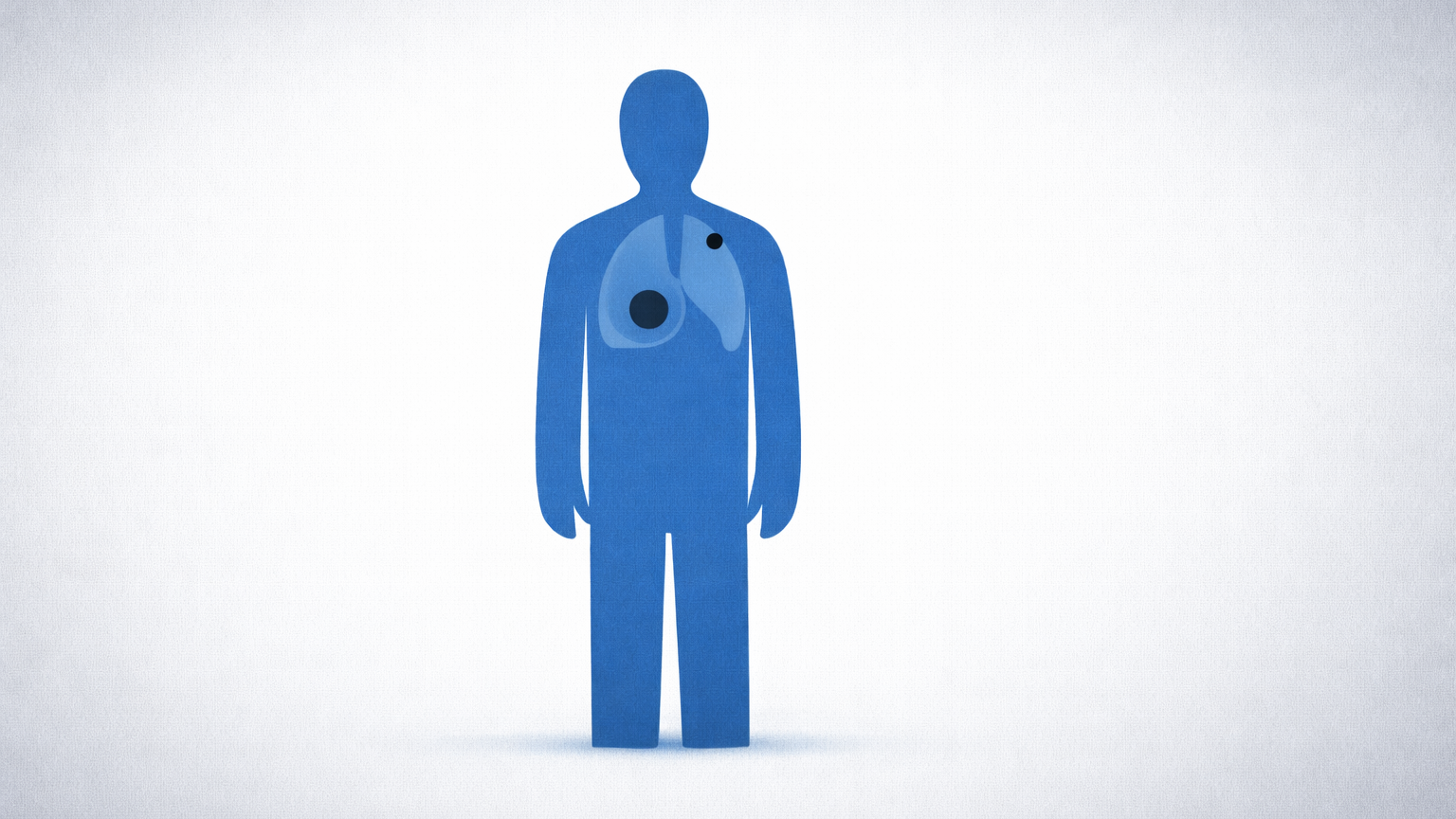
I was recently told that I have cancer again. The first time, it was PSCC. This time, it is in my lung.
Saying those words feels different than the first diagnosis. The shock is quieter—but it is still a shock. The vocabulary is familiar. I understand scans, margins, pathology reports, and staging in a way I wish I didn’t. But familiarity does not make it easier. Knowing the road to hell and back doesn’t make it any easier. It simply changes the way the shock feels and how it gets processed with a little more experience.
The first time, everything was unknown. There were no lists:
Things to expect
Questions to ask
Success rate for similar treatments
Life expectancy
How many times the medical providers have performed treatment for this extremely rare cancer
The difference between ports and PICC lines
Recovery times after each procedure
No psychological support or counseling
And there were so many more documents I wished I had…
This time, I know exactly what cancer can take—and what it demands. I also know what I survived, including surgeries, chemo, revision surgery, scans, weekly PICC dressing changes, open wound care, emergency room visits, just to mention the top line items. That knowledge cuts both ways. It brings strength, and it dredges up recent, unprocessed memories and PTSD’s that were added to my mind and body over the past few years. My body remembers pain, and I am just under one year out from chemo.
For now, I am taking this one step at a time. Once again, collaborating with my art. There are appointments, conversations, decisions ahead. There is uncertainty—but there is also so much more clarity in “the system” and the procedures and the way to become informed. I’ve walked through fire before. I understand the terrain, even if this Thoracic Park landscape is new.
This second cancer sentence puts even more importance on getting my first journey with PSCC documented in this blog. I thought I could put the first journey here then get into contemporary thoughts that might help support you with PSCC or being a PSCC caretaker. I have said this before…what ever happens, I just need to get up one more time than I am knocked down.
If you are reading this because you also are facing recurrence or a second diagnosis, know this: you are not weak for feeling shaken. You are not dramatic for feeling afraid. And you are not alone in standing at this crossroads again. I am now here, again.
I have heard many others on their 2nd, 3rd or more cancer journeys. No matter what we have and what we need to go through, there are others that have gone before us and they are our inspiration to find the energy we didn’t know was tucked inside us.
We can get back to walking through fire, once again advocating successfully for the outcomes we want. I will give daily gratitude so I can realize things that may have been missed during my first journey.
I am sending you strong energy.
Not The CT I Wanted
I just got the CT imagining report I didn't want—and I am grateful to get it. Let me explain the big picture, then get into my imaging report.
I am practicing “gratitude as focus and personal attention.”
Here’s what I am learning and applying to two findings in the CT scan I received.
Gratitude acts as a deliberate tool of personal attention & focus, training the brain to notice and appreciate positive, "glimmer" moments rather than focusing on deficits or negativity. By intentionally shifting attention to what is going right, this practice reshapes neural pathways, boosts resilience, and fosters a more joyful, "present-moment” experience. You can look at the same thing through to different sides of a glass prism and see two different perspectives.
Gratitude as Active Attention & Focus
• Directs Focus: Gratitude directs attention toward what is working, rather than what is wrong. With cancer and treatments, a strong attitude is a major advantage and using gratitude to see in a different way can be beneficial.
• Alternative to Criticism: While both gratitude and criticism require personal attention, gratitude focuses on appreciation, whereas criticism focuses on faults, uncertainty, doubt, fear and other negative responses that impact our mind and body.
• Rewires the Brain: Consistent practice shifts perception, making the brain more attuned to abundance and positivity over time.
• "Glimmer" Moments: It involves noticing small, positive experiences—like the smell of coffee or a kind word—which can transform daily life. Keep reading to see my use of a glimmer moment that I expect to produce better medical outcomes.
How to Practice Attention-Based Gratitude
• Keep a Journal: List three things you are grateful for each day to train your brain to look for the positive. Gratitude means more than thankful, it means actively looking in a different way to discover angles you may have missed up to now.
• Engage the Senses: Spend 20 seconds truly focusing on a good experience, using all your senses.
• Routine Anchoring: Tie your gratitude practice to a daily habit, such as writing in a journal before bed or in the morning. Writing this blog quickly become anchoring for me.
• Focus on Process, Not Outcome: True gratitude is an "alert attention" and an "innocent perception" that doesn't rely on comparison to others.
Here’s how I’m applying this (copied from my Journal):
Yesterday I read my CT Chest results that showed the nodule in my lower left lung is growing. It went from a few to 3x in size.. And there is a lymph node that is slightly increased in size from prior scan, now measuring a few millimeters larger.
This is a concern because my cancer metastasized through my lymphatic system. I’m grateful I have access to CT scans. I’m grateful I am being followed every three months.
This report allows me to focus on the early detection so that I can start advocating with interventional pulmonary doctors to biopsy my lung and the 5mm node. Gratitude helps me focus clearly on my path ahead and to stay present.
I have to practice this so that I can rewrite my brain. Journaling, writing this down, reinforces this lesson so my neuroplasticity builds "gratitude as focus/attention" into my everyday thinking. My next medical steps are become clear, helping me advocate for a diagnosis more quickly than if I was not focusing on seeing the advantages I have and being grateful for them.
I don't want to bury the headline here. I have a faster growing nodule...and a new lymph node change that is a concern. I just want to share my approach where I purposely see my gratitude increasing my attention and focus for things I can use, and not waste my time and energy creating negative thoughts.
Look into the many ways you can learn to apply gratitude in your journey.
We interrupt this blog…
The one year post chemo CT scan of my abdomen and pelvis showed no evidence that the cancer has returned or spread. There were no suspicious lymph nodes, no new lesions, and no signs of metastatic disease in the areas examined. What mattered most was the absence of anything new or threatening. Reading the Radiology Report isn’t celebration, but it is relief: a quiet confirmation that, for now, the ground beneath me is holding. Next up, the lung CT taken at the same time, hopefully the same solid report is coming soon.