
June Gloom
In Southern California, near the Pacific coast, we have a term “June Gloom” that refers to a foggy weather condition. The months of May (which we call May Grey) and June often have low clouds and fog in the mornings. It mostly “burns off” by noon, but sometimes it last later into the day. It is just part of living in a coastal region.
June 25, 2024—I was quickly learning a new meaning for June Gloom. And like the mornings here in the fog, I could not see very far ahead with the initial diagnosis I was getting from the Oncologist and Surgeon. Living through a number of California earthquakes didn’t prepare me for the way I was being shaken and rattled by my introduction to cancer.
I had a video conference with the Oncologist. I was hyper tuned to his voice, his body language, and his posture. His web camera must have been by his keyboard because he stared down at me on my computer screen. That’s not a good “net-side” manner. His voice and posture also were very gloomy even before he said the first word. He didn’t have a lot to say, just how advanced my cancer was, how rare and aggressive it was, and how the outlook was not good. OK, that felt like a large truck just ran over me, I was stunned and it was my turn to talk… All I could think of was to ask what Stage I was at. He said last week he would have said 3A, but today I was at Stage 3B. OK, I’ll stop asking that question, I seem to be advancing at light speed.
We discussed the biopsy that was quickly being scheduled for next week, and our video call ended. And I waited…more waiting, for the biopsy.
Rads Visit + PET/
07/17/24- visit with radiation oncology, Dr. Sandhu, who was in agreement with plan for surgery.I ask him if he had ever seen “this” before… I wasn’t sure what to call it. He said yes, and I took a depth breath, relieved someone knew what this was. He continued: “20 years ago.” My heart crashed.
07/29/24- PET/CT - focal intense uptake in 2.5 x 1.7cm penile lesion (SUV max 22.29), likely site of primary malignancy. Moderate uptake in 8mm L inguinal node (SUV max 8.64), likely representing locoregional metastasis.

I don’t have 6 months?
I don’t have 6 months?
Nothing, nothing, nothing could have prepared me to hear the diagnosis.

Nothing, nothing, nothing could have prepared me to hear the diagnosis.
On the roller coaster you soon learn there is no low point, things find new lows while you do your best to hold on.
June 7, 2024—By the 7th I had been with UCSD Health for one week. I received a call about a Cystoscopy (I learned to call them “cystos”) being set up and a urinalysis order was placed. A cysto is when a tiny camera at the end of a fiber optic cable are put inside your urethra. I don’t think my feelings and reaction were much different than what other men must have felt hearing this—some fear (of the unknown), expectation of a lot of pain, and the thought of a medical team watching me as someone pushed a camera inside me. I quickly understood how someone could decide not to go through penile cancer treatment…but I had to sail into this storm, so let’s move along….
June 16, 2024—I woke up in a cold sweat at 330am.
June 19, 2024—Another cold sweat at 5am, another night of poor sleep. I sat up and felt the acute lower left quadrant pain that I had been feeling over recent weeks. I had stopped putting my left hand on my hip because this pain was like a hundred bees stinging me in the same place. The penile pain that had continued to intensify was now joined by this new inguinal node pain in my lower left side. I could feel something swelling under the skin, much the same way as the penile pain had started. Enter the double dragon—acute, chronic, spreading pain combined with the emotional roller coaster. And the day before I had been at the smaller hospital system, to be with my partner as she recovered from her cancer surgery.
‘We do everything together, even cancer.’
A phone call from UCSD:
First Oncology appointment was set for Friday (two days away), at the old hospital. I was told any future procedures would be done at Campus Pointe (the newer hospital campus).
Cysto set for June 26th.
I was told to message my primary care doctor about stopping some meds the night before the cysto. Many months of advocating, and waiting suddenly turned into a downhill coaster run.
June 21, 2024—My first day in the “old hospital” at UCSD, my partner and I met with the Oncologist. There was very little said. I wondered if the doctor left his patient skills at home, or he was just more coldly scientific all the time. He told me how serious my condition was and that at this late stage the survival rate was not good. He said 50% of men would not make it to 5 years, and 50% of men would survive to five years (the 50 50 rule). My heart felt like someone ripped it out of me and threw it out of an airplane - free fall! A lot of that appointment is a blur, probably my brain’s way of self protection.
But this appointment was just the beginning. Later in the afternoon I was to see the Oncologist’s colleague, an Oncology/Urologist surgeon. I went into the first appointment with the goal of learning whatever procedure I needed and advocating for as little tissue loss as possible. I clung to my minimal gland/tissue loss as long as I could. I came out of the appointment devastated by what I heard, and how it was delivered to us in such a matter of fact way. I guess my insurance doesn’t cover empathy.
I headed back to the old hospital in the afternoon for a Urologist/Surgeon appointment. Not the type of double header I preferred, to use a baseball term. I was still in deep shock from the morning appointment. I didn’t think it could get worse. It did.
The Urologist explained where he thought things were. Again, I don’t remember much of it, because of one thing he said… We were in a small, dingy exam room (typical for the old 1950’s hospital) and the doctor said “if you do nothing you may get to the end of the year.” He was saying less than 6 months, if I did nothing. But why would he say that—do nothing? Had this doctor had a previous male cancer patient who chose to not have his penile cancer treated in hope of “this too shall pass?” Why was the doctor being as blunt as a baseball bat hitting me in the face? (baseball reference #2).
Of course I would pursue treatment. What felt like high voltage electric shocks in the morning appointment now quadrupled in this second appointment…I was no longer thinking about saving my body parts, rather I was thinking about saving myself.
I drove home in heavy traffic, feeling but not knowing what to feel. We had a family meeting, and the few words I was able to get out were drown with the tears that started to flow. Next up…waiting. For phone calls and scheduling and who knew what else—being scared in slow motion.

I had a lesion. Wrong - it was Stage 3 cancer.
PSCC is rare—but rarity comes with a cost. When a cancer is uncommon, it is often overlooked, misunderstood, or delayed. That delay can change outcomes. In my blog I explain how rarity shaped my diagnosis, why time matters so much with PSCC, and how learning to advocate for my own life became essential.
This blog is being created for you—wherever you are—because Penile Squamous Cell Carcinoma (PSCC) is rare, and rarity leads to delay. PSCC has no borders. It affects men, partners, families, and caregivers everywhere.
Many people have never heard of PSCC. Early signs are often dismissed as irritation, infection, or aging. Symptoms involve intimate anatomy, making conversations with doctors difficult. Some clinicians may never encounter PSCC in their careers and may not pursue early biopsy. Healthcare Systems can cause delays—appointments, referrals, cancellations—adding weeks or months while cancer spreads. And fear, embarrassment, or uncertainty can keep people from seeking care at all.
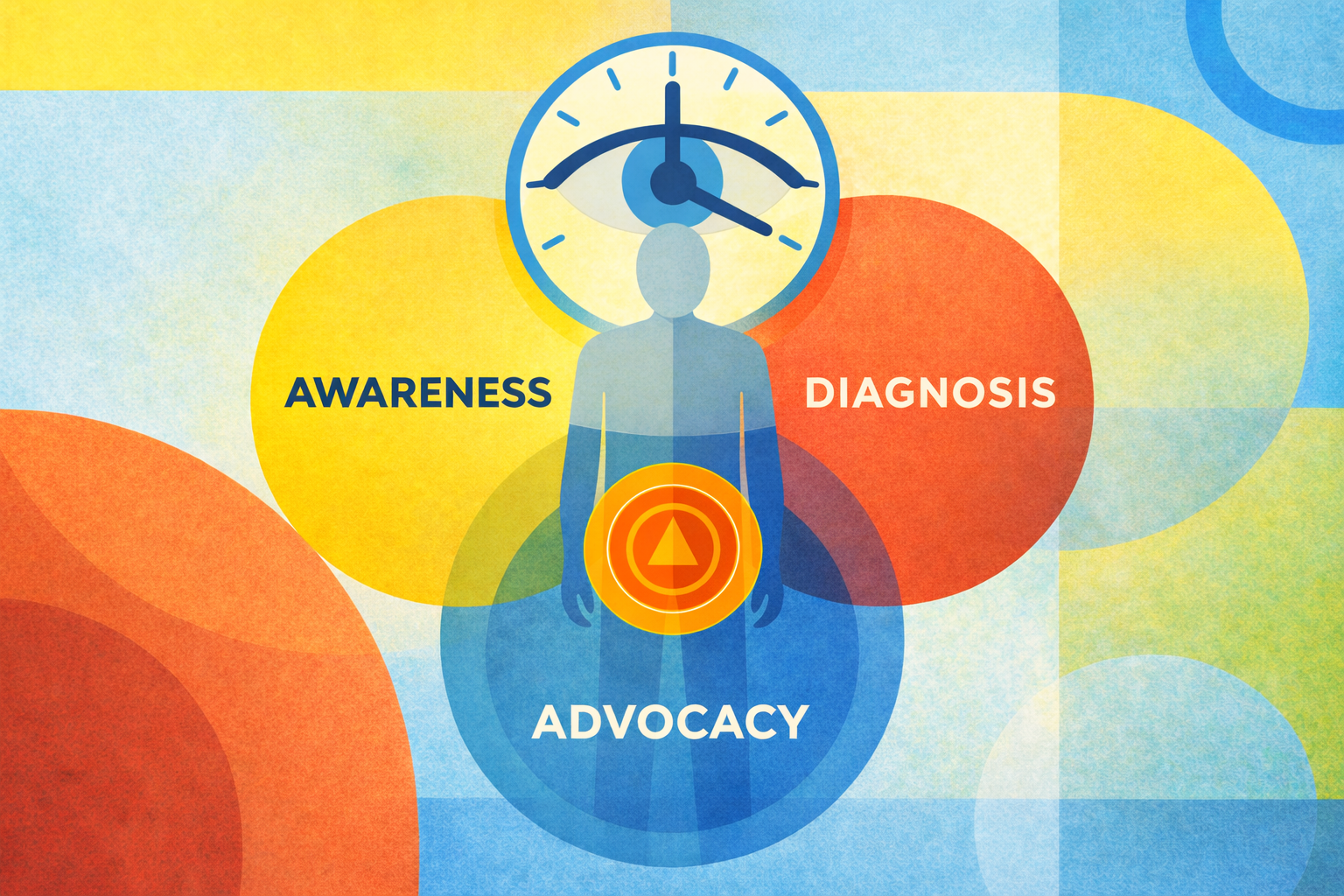
What I learned to do:
Become aware of PSCC & it’s treatment
Advocate for myself to get the best outcome
Challenge everything, get second opinions
For me, delay was not theoretical.
For months, my concerns were treated as non-urgent within my regional healthcare system. I received two formal letters stating I had no immediate medical need to seek out-of-network care to save my life. My assignment to a urologist took months. A biopsy was ordered, then cancelled. No meaningful diagnostic steps were taken while visible and painful changes were happening quickly.
During that time, PSCC was running a sprint inside me.
Healthcare systems move in weeks and months. Aggressive cancer does not. Time matters with PSCC, and I never heard the words “Stage 1” or “Stage 2.” By the time my diagnosis was finally made, my cancer was already Stage 3b.
Everything changed when I transferred my care to a large California university-based healthcare system. There, urgency replaced delay. A biopsy was ordered. A diagnosis was made: Penile Squamous Cell Carcinoma, Stage 3b.
My care was taken on urgently by the University of California, San Diego. While no system is perfect, the speed, seriousness, and coordination of care there saved my life. By then, PSCC had already spread to my inguinal lymph nodes—but timely action made the difference in saving my life.
Certain words carry weight:
Penis.
Penile.
Biopsy.
Metastasize.
Cancer. Radiation. Chemotherapy.
Heard one at a time, they can feel awkward or frightening. For me, I wasn’t given time to feel embarrassed. My life accelerated suddenly into a race through uncertainty, darkness, and fog.
I’m sharing this not to assign blame, but to make one point clear: when a cancer is rare, it can be overlooked—and results-driven self-advocacy becomes critical.
This blog exists to help reduce delay—for you or for someone you love. A diagnosis is frightening, but what follows can bring frustration, confusion, and unexpected challenges. My goal is to help surface those issues early, so you can plan more effectively. Getting your diagnosis promptly is critical, and then everything you do next shapes your outcome.
Through these posts, I will share my experience with PSCC, surgery, chemotherapy, and life after treatment—not to provide medical advice, and not to document every detail, but to offer context. I focus on process, not spectacle.
In upcoming entries, I will explore:
How my diagnosis was finally made
How concerns (mine, caregivers) were raised—and sometimes missed
How family and doctors helped shape initial decisions, and how we refined them later
How treatment unfolded
How recovery continues into survivorship
I will share what helped, what was unclear, and what I wish I had known earlier.

My care team includes my family, friends and my UCSD-based medical team.
In an upcoming entry, I will talk about communication with my care team. We are not taught to speak about cancer, and mortality. People say things to cancer patients that are well meaning, but don’t always land as they were intended. I will share my approach to communicating with my team.
‘Yes, I am always barefoot!’
This blog is also for caregivers. Partners, family members, and loved ones often carry uncertainty quietly while trying to provide support. I will share examples of how conversations unfolded, where their advocacy mattered most, and how navigating cancer is rarely a solo effort. Diagnosis is the first difficulty, more will follow—which I called ‘the roller coaster.’ Recognizing there will be ups and downs can help you lean into things, one day at a time.
PSCC awareness depends on attention—from patients, caregivers, and clinicians alike. Good outcomes depend on early recognition, timely diagnosis, and the confidence to speak up when something doesn’t feel right.
If this blog helps even one person seek care sooner, ask a clearer question, or feel more prepared to advocate for themselves or someone they love, then sharing my journey has served its purpose.
No Diagnosis? ADVOCATE!

APPOINTMENT PHONE CALL TO DOCTOR'S OFFICE**Ty: Hi, I need an appointment with a urologist, please.
Clinic: You can’t see a urologist until you see your primary care doctor (PCP).
Ty: Okay. I think this is urgent. When can I see my PCP?
Clinic: Your PCP’s first available appointment is in two weeks.
Ty: (after a pause) Okay. I’ll wait.
That was the moment I did what many people do—I waited.
I had noticed a small, painful spot under the skin, that seemed very firm.
That reddish spot is why I called my doctor’s office. What followed wasn’t healthcare; it was process. Patient vs The System. The system referred me to my primary care doctor instead of the Urologist I needed. Then I waited, weeks went by. Finally, a five minute PCP in-person appointment so I could be referred to Urology.
Then I waited, again, for weeks. Another short appointment—I was given a topical lotion, that caused a terrible burning pain. Another appointment, I was given catheters (long plastic rods) that had a steroid medication on them. I was told to put these inside my urethra. I started realizing treatments can be as bad as, or worse than what’s being treated. At home, I barely got the first (of many) catheters in (about an inch) and started bleeding profusely. Scary and painful stuff.
Then the Urologist left the clinic and moved away. I had to start over, find a new Urologist. The "Uro department” went from three to two doctors. Request after Uro request, this turned into months—I even tried to escalate up the system so I could get a Urologist appointment. I tried Patient Services. I tried! And I waited. Each step felt procedural, detached from the reality that something in my body was changing quickly.
Long before I had a diagnosis, I knew something wasn’t right. Rare cancers don’t announce themselves loudly. They don’t trigger alarms or urgency. And when answers are slow, vague, or deferred, advocacy stops being optional—it becomes self-preservation.
This post is about what it means to speak up before you’re given permission to worry. I will talk about why action matters even when no one has given a medical name to the thing growing in your body. This blog is about how waiting—quietly, politely—can cost more time than you think you have. PSCC moved quickly, my decisions on how to get an accurate diagnosis were my responsibility and no one else’s. I had to take charge and take action.
What I learned:
PSCC doesn’t wait politely. In my case, the cancer progressed while appointments were delayed—moving faster than the process meant to identify it. I recently heard about men having PSCC for years before having real problems began, but mine only needed a few months to get to Stage 3.
Warning - real life ahead… My cancer started under the skin and moved to the surface. I have heard others had their cancer start on the surface and move deeper. Either way, once invasive, PSCC has a known pathway to the inguinal (groin) lymph nodes, sometimes within months. Eventually I had 19 of these nodes removed, with some being malignant, which is why I needed chemotherapy next. I don’t want to digress too much here, but I want to use my lived-experience so you don't have to go through what I did.
No one ever told me any of this…and yes, I searched the internet and found deeply disturbing images. I don’t recommend that. Get medical help and get it quickly. Learn to be a successful squeaky wheel.

What A Difference A Day Makes
“I only have to get back up one more time than I am knocked down by the cancer or the treatments. Or the system.” Ty Creighton
After months of being on the phone to my regional healthcare system, I finally was able to get a Urologist assigned, and make an appointment. Without a biopsy or any imaging, the Urologist quickly went to “I think this is cancer, 95% chance.” We had a difficult discussion and concluded with the need for a biopsy. An order went in, the biopsy was scheduled, and I waited. Three days before the biopsy in May 2024, I went to my online portal to check the biopsy time. It was not there. The biopsy had been cancelled and not rescheduled. Another moment on the “roller coaster” where you sit in silence, in shock, trying to figure out what happened. Even more important, you have to get back up and find the next step.

Once again dear friends, the journey becomes a roller coaster.
I don’t like roller coasters.
“I only have to get back up one more time than I am knocked down by the cancer or the treatments. Or the system.”
That’s the thought I had one night and it is one of the things that helped me get through the roughest parts of the roller coaster ride. Instead of going back to the same healthcare system that had repeatedly failed me on this and on previous health issues, I decided to make a few phone calls. On one of the calls I was given the name of an independent healthcare agent in my county. Normally in the US, we can only switch healthcare systems around December during “open enrollment.” But I called and talked with the agent anyway. What a difference this call made, which you will see if you continue reading about my journey…
The agent explained she provided a professional service to help match people with the health insurance that best fit what they were looking for.
(Let me stop and say that I have MediCare health insurance, the government program I paid into over the life of my career.)
The agent was an expert in MediCare and the insurance companies that delivered the benefits to patients. We talked about what I wanted, including being able to move from the regional healthcare system to the University of California at San Diego. UCSD combines research, integration of research into healthcare, and teaching new medical professionals and has hospitals, clinics, urgent care and numerous specialty facilities.
With the answers I gave, the agent went off to narrow down insurance companies with the best three programs. She called back in a matter of hours and we went over the programs. One clearly seemed the best to me, and it was a company I knew about. I can talk more about that if you are interested, send me a message.
Where this made a life changing, or perhaps more accurately a life-saving moment was the timing. The agent knew of a way to switch my insurance so on June 1, 2024 I would be at UCSD, no need to wait five months for Open Enrollment, After months of the cancer running in me with no diagnosis at the smaller system, I was now in the California state-wide university hospital system. Within a few days I had new insurance cards and on June 1st I was able to call and start getting appointments lined up.
One more side note that may be useful… At one point at the smaller regional system I was so desperate to get help that I called UCSD and said I would pay out of pocket since my insurance would not transfer to them. I had two appointments and was told how serious the painful red area was, and by this time even the slightest pressure caused bleeding from inside. So on June 1st I was going to get help quickly and nothing would stop me.
With urgency, UCSD made an oncology appointment, and that department made an urology surgery appointment for me, on the same day! I made more progress in a few weeks at UCSD than I had in months with the smaller hospitals — administratively rigid & procedural.
Now the roller coaster goes into high gear. Information immediately comes at me from a 2” fire hose. There is little or no time to process everything I was being told. Months of delays turned into days of rapid change, with no guidance, no counseling, just strap on the parachute and jump.

June, 2024, when the Oncologist & Urologist say you have maybe 6 months to live…. (2026, I am still here!)
In a future update I will talk about a major failure in my medical care, the lack of counseling. My medical team went after my cancer, but all my efforts to get some counseling for the scariest events in my life…those efforts came up empty. I felt desperate to talk to even one other man that had faced the monster’s den that I was standing in front of…but there was no one. For now, hold that thought and I we will revisit this failure in patient care… I appreciate you being here and hope you will spread the word about Early Eyes Save Lives, help create the awareness this and all other cancers need. I’ll be back here very soon!