A Cancer Journey Starts With Questions.
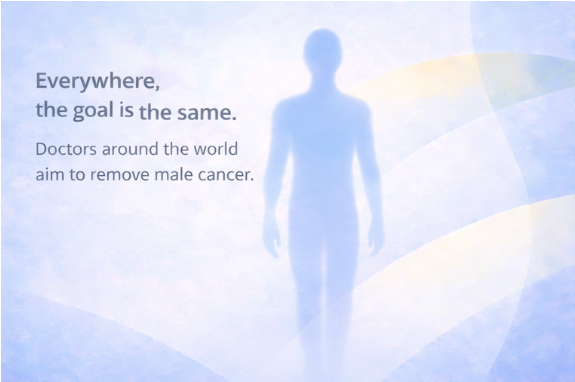
I have learned cancer treatment is not delivered the same way everywhere.
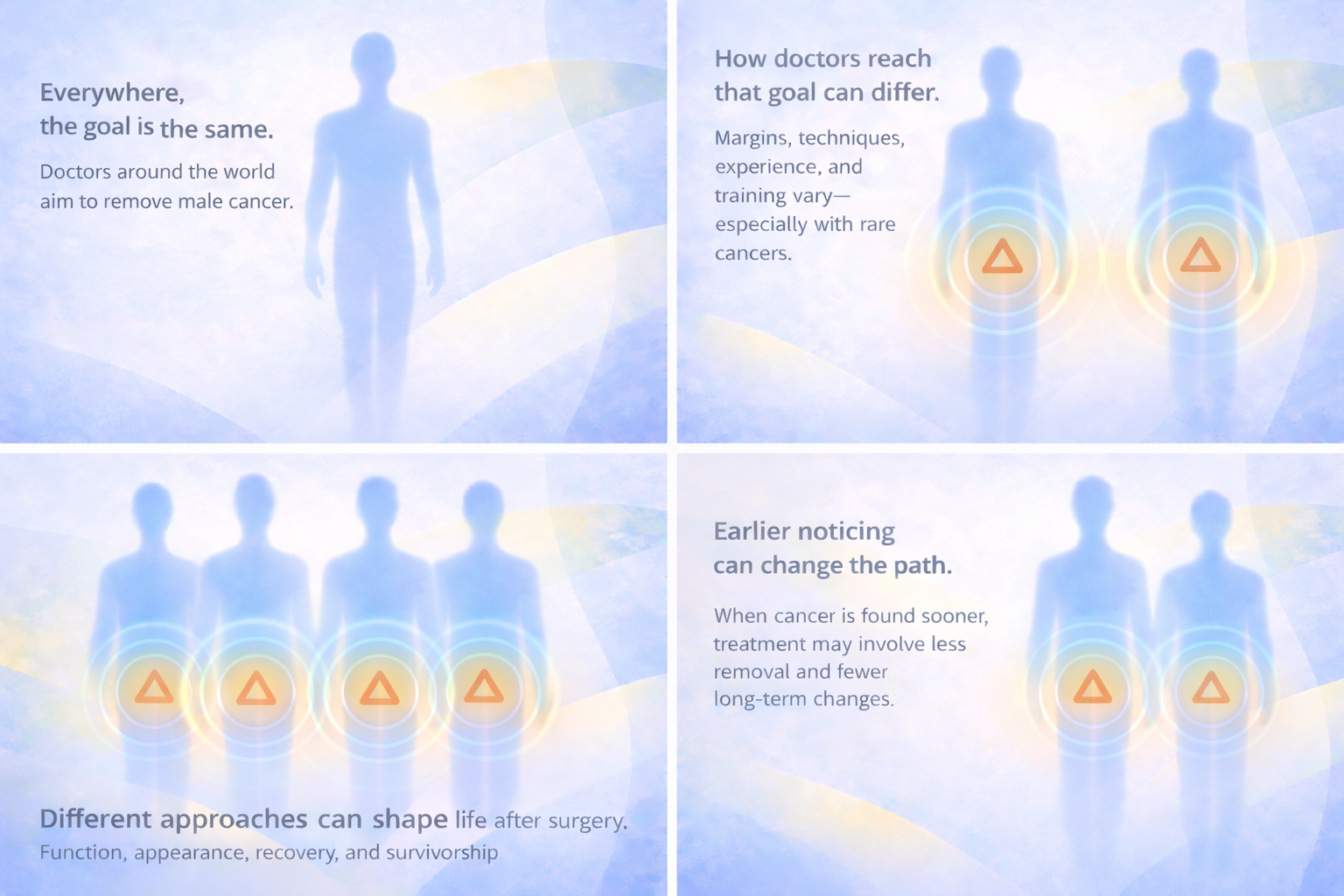
I have learned cancer treatment is not delivered the same way everywhere. Different doctors may recommend different treatments based on their training, experience, available resources, local guidelines, and the number of similar cases they have treated before. These differences can exist between countries, between hospitals, and even between doctors within the same clinic. While the goal of treatment is the same—to remove or control the cancer—the path to that goal can vary in ways that affect recovery, function, appearance, and long-term quality of life. Because of these variations, patients and their caretakers should play an important, proactive role in their care by asking informed questions before treatment begins.
Asking questions is not challenging a doctor’s expertise; it is part of shared decision-making and good medicine. I tell my doctors “I am the Chief Medical Officer of Me.” I let them know I rely on their experience, and appreciate them working in a collaborative way with me. They get a vote, but I get 1.1 votes after they explain things to me. The more clearly I understand my options, the better prepared I am for both treatment and life afterward.
There were many things I was not prepared for during my treatment and into my ongoing recovery, and those are some of the reasons I am sharing this blog for you to learn from.
Here is a basic starting point, a list I wish someone would have handed me to help me ask the right questions early on.
Treatment Decision Checklist
For Men and Caretakers
Use this checklist before treatment begins. You do not need to ask everything at once.
Understanding the Diagnosis
☐ What type of cancer is this?
☐ What grade and stage is it?
☐ How certain is the diagnosis?
☐ What information is still unknown?
Treatment Options
☐ What treatment options exist for my diagnosis?
☐ Why is this approach being recommended over others?
☐ Are there less invasive or organ-sparing options?
☐ What options might be used in other hospitals or countries?
Surgical or Procedural Details
☐ How much tissue is expected to be removed?
☐ How are surgical margins determined?
☐ What decisions may be made during surgery that affect outcomes?
☐ Do all doctors in this facility or hospital system use the same exact surgical procedures?
☐ Do you have patient information (in the same facility that I will be in) regarding post operative infections such as Staphylococcus? How prevalent is it, what should I look for post op?
☐ Is reconstruction considered as part of treatment?
☐ Will I have drains, or a catheter or other things I should learn about? Who will teach me how to maintain things like drains? Who will give me contact information for after hours issues?
Experience and Specialization
☐ How often do you treat this type of cancer?
☐ Is this a rare cancer in your practice?
☐ Would referral to a higher-volume center be appropriate?
☐ Do you have recommendations about setting up a second opinion?
☐ Do you have an Oncology Social Worker? A Patient Advocate? Ombudsmen?
Functional Outcomes
☐ How might urination change?
☐ How might sexual function or sensation change?
☐ What daily life adjustments are common after treatment?
Appearance and Healing
☐ What will the area look like immediately after treatment?
☐ How does appearance usually change over time?
☐ What scarring should I expect?
Recovery and Follow-Up
☐ What is the typical recovery timeline?
☐ What complications should I watch for?
☐ How often will follow-up appointments be needed?
Alternatives and Timing
☐ What are the risks of waiting or delaying treatment?
☐ Would a second opinion change the plan or timing?
☐ Are there international or alternative guidelines relevant to my case?
Emotional and Practical Support
☐ What emotional reactions are common after treatment?
☐ Are mental health or peer support resources available?
☐ Are there resources for partners or caretakers?
Final Reflection
☐ Do I understand the tradeoffs between options?
☐ Do I feel comfortable with the plan?
☐ What questions do I still need answered?
Reminder:
Asking questions is part of good care.
Consider starting a journal and/or diagnoses/treatment notebook to manage your journey better.
Different doctors may recommend different approaches, and understanding those differences helps us take part in decisions about our bodies and lives.
Ask yourself: Do I know the best hospital or doctor in my country for my cancer? In another country?
Do I need to learn how to get a second opinion prior to treatment, especially when it may take time to set it up?
Tumor Board…
08/01/24- tumor board - recommendations inguinal lymph node dissection vs concurrent chemoradiation.
08/15/24- visit with Dr. Salmasi, who recommended total penectomy and inguinal lymph node dissection.
08/19/24- MRI Brain - prior/chronic micro-hemorrhage in R cerebellar hemisphere, L superior cerebellar peduncle, no surrounding edema.
09/13/24- PET/CT - penile lesion 1.4 x 0.9cm (SUV max 6.25), isolated 1.3cm left inguinal lymph node (SUV max 13.79).

The Day After…that’s a rap!
The Looking Glass (My rap poem about the day after my biopsy)
Not long after my diagnosis of PSCC cancer I decided I could “fight cancer” or take a different path—collaborating with my cancer. What an almost unique gift to someone working in different art mediums…an extremely rare cancer and an idea for a different cancer journey. I picked the collaboration path, so I could express my steps along the way, and for other reasons I will write a blog entry about. Here’s one if poem, originally published to my friends and family.
‘Yeah.
Scalpel’s done but the silence loud, House still standing, but not me, not now. Cargo shorts cover the thing that grows, Cut it. Freeze it. Tag it. I know.
Yeah, I know.
Bruise on the skin but my mind won’t mend, Time stretches out like a rod that won’t bend, Somewhere on glass under cold lab light, A slice of my life in a microscope’s sight.
Statistics whisper, “You may be fine,” But there is little peace since last night at nine, Will my phone buzz jump like a verdict call, And send me into a spiral fall?
If it’s nothing, I step back through, Old version me like déjà vu, If it’s something, no rewind cue, 1.0 gone — I become a 2.
Waiting ain’t loud, it’s a low slow burn, A lesion lesson in how little control you earn, I wait in the pause where the air feels dense, Yesterday was before, and soon the consequence.
Yeah. Clock still ticking but I haven’t moved, My life balanced on a lab room slide groove, Not broken. Not healed. Just suspended view. Waiting on results to tell me what, where and who.
Just chillin' and feeling blue.’
Partial Penectomy
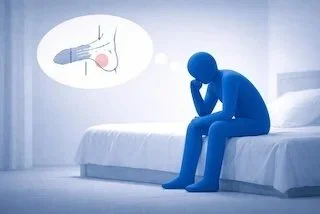
07/31/24- partial penectomy.
Pathology: invasive poorly differentiated squamous cell carcinoma, p16 positive, 3.0cm, present at corporal margin, urethral margin. +LVI, +peripheral nerve invasion. Focal positive margin at penile shaft. Grade 3. 3.1 x 2.9 x 2.7cm. pT3 - invasion of corpus cavernosum.

At The Edge

The Crush.
“My life is out of my hands.”
What unsettled me the most wasn’t just that something was wrong, but how fast it was happening. My body was changing and I couldn’t get anyone in my healthcare system to treat me with urgency. As the changes accelerated, I felt increasingly out of control of my own body, while my sense of hope steadily wore thin. The ambivalence I encountered from my healthcare only added more weight from waiting, making it a heavier burden than it already was.
There was pain—but more than that, there was momentum. Whatever this was, it wasn’t waiting. Between appointments and explanations, I was left carrying the hardest question to face alone: was this serious, or was it fatal?
A biopsy became the only way forward, not as reassurance, but as a line between imagination and truth.
This is what it feels like to stand at that edge, watching your body change before you understand why.
I learned I translate time and waiting into a physical sensation of weight—gravity adds to each moment of what I am going through.
In that space, I felt my mortality closing in. Even with family supporting me—loving me, reassuring me, standing close—this was something I had to carry alone. Facing your possible death is one of the most intensely personal experiences there is. No one else can do it for you. You can be accompanied, but you are still the one asking the short, tough question in the quiet moments: is this it? It feels like it is.
That question didn’t arrive gently. It came all at once—intrusive and disorienting—as if time slowed just enough for me to step outside myself and watch the moment strike like a rusty harpoon. My mortality flashed into view, sudden and unmistakable. Whether this was cancer or something else, it altered how I understood time, fear, and myself.
I was watching the “me” I had always known die, not knowing if there was something next.
The weight of that moment felt familiar from only one other time. Years earlier, I had left my better judgment on the beach at Waimea Bay on the North Shore of Oʻahu and swam toward my first-ever set of twenty-foot waves. The first monster wave drove two of us down, hard into the reef and held us there. I remember having just enough time to understand that this might be where I would die.
The Pacific pinned me. My breath was running out. Nothing I did changed the fact that the ocean was in charge. Facing a biopsy and what it might reveal—that same Waimea Bay feeling of being crushed returned. This time, tons of water were replaced by countless alien cells moving inside me—unnamed, unmeasured, unchecked. How could I estimate my odds when my repeated pleas for help were met with institutional endless delays?
The fear of what the biopsy might reveal was matched by fear of the biopsy itself—by not knowing what would happen once the procedure began. I had already been living with pain for months, and with bleeding more recently. The cancer had surfaced, grown, then broken open. I was left to do the best I could managing an open wound, while I waited…
Pain from whatever “it” is.
Pain from the biopsy that was meant to name “it”.
Pain from future treatments that might follow—up to and including the loss of part, or all of my penis, and lymphatic system.
And a growing fear “it” might be loose in my organs…
A Waimea tsunami—the night before the biopsy, all of this finally caught up with me. I remember lying there feeling crushed—not by a single fear, but by all of them pressing at once, including months of watching the cancer killing parts of me while it spread unchecked.
When my mind finally became overloaded, my body took over. Surprisingly time and my awareness narrowed. My breathing became something I had to remember to do. My muscles stayed tense even when I wasn’t moving, as if I was bracing for an impact that never arrived, but never went away. Sleep came in short, shallow stretches, interrupted by sudden awareness—my heart racing, while a strange, quiet sense told me to stay alert to survive.
Waimea Bay had taught me how quickly life can slip beyond our grasp, and now that lesson returned with sharp precision. I couldn’t think past the need to be released from what was happening. I couldn’t picture myself reaching the surface this time. The quiet calm of the hospital the next morning could not have been in sharper contrast to what was unfolding inside me—tumbling inside a tsunami.
Biopsy: A line between imagination and truth.
Turning my life over to an anesthesiologist I didn’t know and a surgeon I had met only a few times deepened my feelings: 1) no control, 2) my life in other’s hands 3) waking up and finding what?
I remember very little from the moment I walked into the hospital until I arrived back home. The next surprise came later, when I realized the surgeon had addressed the open wound that had been bleeding for months. No one told me what to expect. I had lived with this wound for months, it had become part of me. My journey was and is filled with moments like this—no one explaining important milestones and having them just appear suddenly. Where’s the check list of things to expect, the list of things that I should become familiar with ahead of time? Are doctors not taught to make lists?
When I was finally able to see the surgeon’s biopsy work, I froze. In that moment, I felt something I hadn’t felt in a long time: a partial return of my sense of survival. My fear didn’t disappear, and it didn’t even slow—but seeing the open wound now closed was my first positive treatment in many months. A small glimmer of hope appeared with the doctor’s wound care and for the first time, the future felt not entirely closed.
I made no mistake about my wound being sewn up. Tiny bandaids don’t save lives. I was still grasping for any life ring in the ocean. I needed the biopsy results to know what “it” was. My brief break from an open wound was not cancer treatment, it was the smallest of procedures, but when no treatment had been offered in 2023 or 2024, such a small repair procedure took on a larger importance for me.
What remained was the waiting.
WHAT REMAINED: TIME
Time: not the kind measured by clocks, but the kind that stretches inward, where each hour carries more weight than the last. It’s additive. Somewhere, tissue had been taken, labeled, stained, frozen, and placed under glass. Somewhere, answers were forming. I was no longer imagining what might be wrong—but I was not yet allowed to know what was true. And so I stood in that narrow space between relief and reckoning, waiting for the words that would decide for me how much of my life would change.
“Like treading water far out at sea.”

Lessons Learned
One of the goals I have is to bifurcate the way we look at penile and other cancers that impact our body’s most personal spaces. We can think about these diseases as medical and health issues, while we separate the cultural and other aspects that often slow us from finding understanding and awareness.
We need to work at removing stigma, inaction, disbelief and other human traits from the immediacy of what might be happening if the small difference you are finding is cancer. Cancer only needs a space in you; and time without treatment.
Here are some lessons I can share, as I look back on my lived experience.
Time changed shape on me. Minutes stretch, days compress, and waiting becomes something I felt in my body, not just in my brain.
My body got louder than my thoughts. Every sensation carries more weight when it doesn’t yet have a name.
Uncertainty is harder than pain. Pain can be endured; not knowing what it means is far more destabilizing.
I had less control than I expected. Appointments, results, and next steps move on someone else’s schedule. And I am not a morning person, like many doctors are.
Support matters—but it doesn’t erase meditation or a quiet space. You can be loved and still be alone with the question that matters most.
My idea of strength needed to change. Strength becomes less about toughness and more about staying present and adapting. And in my case, it became about collaborating artistically with my cancer. I came to realize this was a “marathon of hurdles” and not something that was going to “get a quick fix.” I will talk more about pacing myself in coming blog entries.
My imagination can and did work against me. When facts are missing, my mind fills the space, sometimes aggressively.
Identity is tied to the body more than I admitted to myself. Especially when the part(s) under threat are rarely talked about.
And my most personal body space quickly turned into something that rang in my ears almost every week—”do you mind if I take a look.” I will write at least a full blog entry on this topic. I stopped counting at 100—the number of people that needed to see my private space, before, during and after surgeries, and into chemo and survivorship. And yes, there were medical providers that “wanted” to see and to discuss what I was going through—part of the ‘very rare disease’ life I was cast into. This is where my mentoring skills began, at UCSD, a teaching hospital. More to say about paying it forward and backward—coming soon…
Relief and fear can exist at the same time. Feeling better doesn’t mean the danger has passed.
A biopsy isn’t reassurance. It’s the line between speculation and truth.
Humility becomes unavoidable. My body didn’t negotiate with me, and neither did time. I had no brakes. So I added my humor and perspective to the journey—actually I just made sure I didn’t lose these parts of me during the journey (or the roller coaster times).
Early attention matters. Small changes carry weight, and delays are not neutral. ‘Early eyes save lives.’ Please spread the word about awareness to everyone you know, it is about all types of cancer and diseases, early detection of small changes matter.
Here’s a link to my YouTube Penile Cancer Awareness animation that you can use to share the life-saving message about early detection and education: https://www.youtube.com/watch?v=hdPfz05mF6U
Biopsy Day
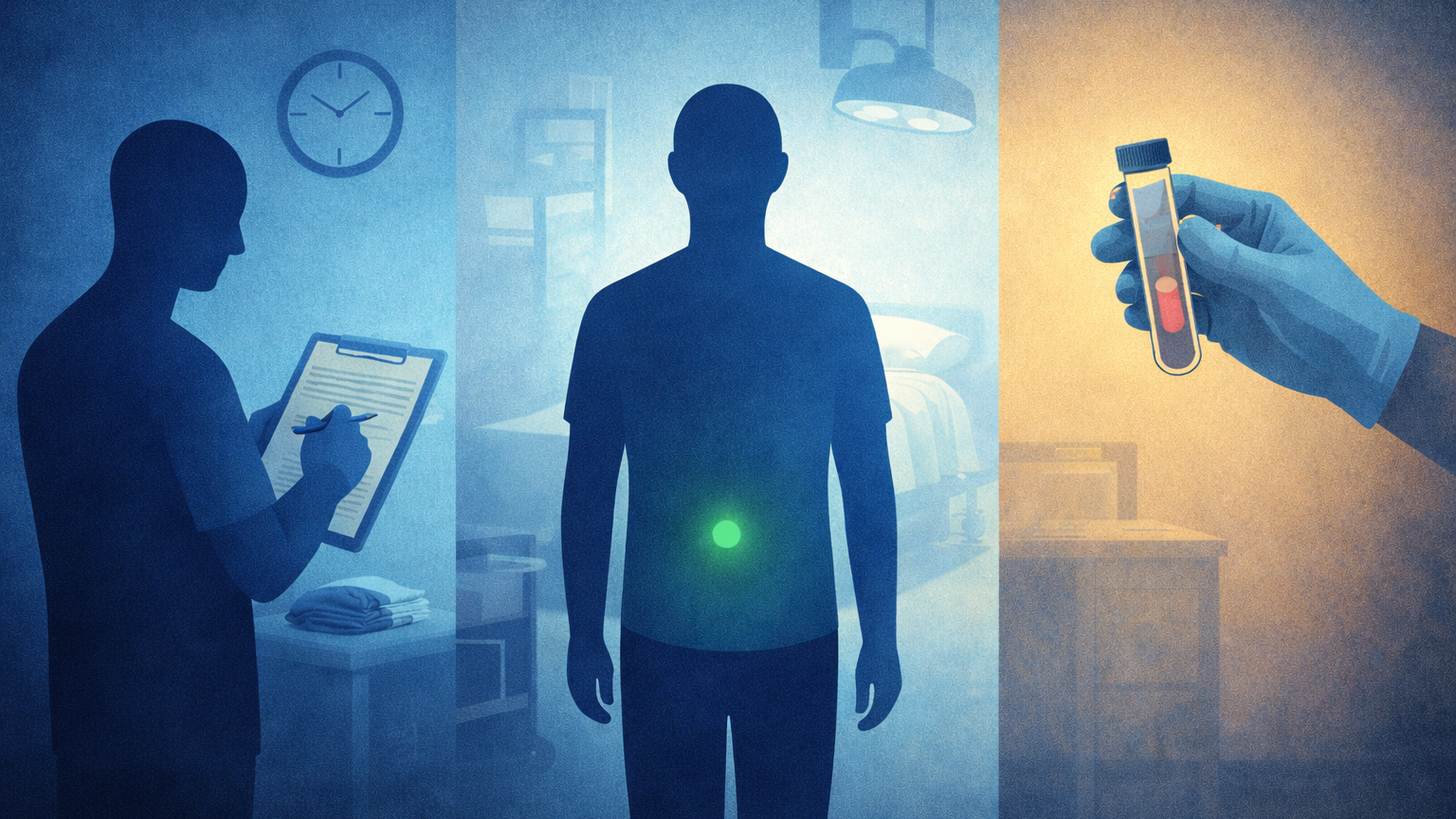
07-15-2024—The day of the biopsy arrived. I had a quiet resignation. I had been raising red flags for months, trying to get medical help, and now the time had finally arrived. Knowing how much I needed the biopsy didn’t make my anxiety about the procedure go away. I was very alert and focused on everything happening, until the anesthesiologist finally came into the patient pre-op area and started talking with me. My mind started to wonder as we talked—I was in self preservation mode.
I told the anesthesiologist about my phobia of having tubes in my throat and having someone hold a mask on me. He understood and came back right before they wheeled me to the Operating Room. He put something into my IV and I fell asleep. That worked well for me. Having a good conversation with the anesthesiologist is something I highly recommend. They are there to make you comfortable, but they need to know from you what you want.
The painful issues that had followed me for months would finally be examined, sampled, measured, frozen and taken to Pathology for analysis. With this diagnostic procedure I wasn’t moving toward reassurance. I was moving toward definition and understanding of what really was happening.
I thought about a particular moment when I would stopped being a person in charge of myself, as I transitioned to becoming a body in a system, completely unaware of everything during the procedure. Paperwork signed. Belongings set aside. Clothing exchanged for a gown that had been worn by so many others for their surgeries. I was still me, but I was no longer in charge of what happened. I was no longer thinking about what comes when I wake up.
Control doesn’t disappear all at once. It started when I woke up at home, and could not eat anything—doctor’s orders.Control slips away a little more during checkin at the hospital and I’m told where to go and wait. I waited with two family members while other people are prepped for surgery ahead of me.
Observation: There was a hush in the outer waiting area, like when you attend a memorial service, or walk respectfully into a large cathedral while other people are in communion.
Control continued to be handed over in the pre-op area when I gave myself over to the system, including my shoes, comfortable shirt and jacket, my keys, my phone—everything. I was now fully following a script that I was learning as the system moved me closer to surgery.
And then the most complete surrender—allowing my consciousness to be turned off while others carried me through something I could not witness. I had so many thoughts racing through my brain for months about the biopsy that seemed so far into the future, and now I was on an one way ride being taken to the room where it would happen.
I would wake up in a different state, using my ”state machine” training when I was a software developer. And there would be no returning to the state prior to the biopsy.A new ‘state of time’ accelerating would replace my pre-biopsy feeling of at least having some control.
The procedure itself was not what I had feared—mostly. It would be uncomfortable, and my body would be exposed to people I would never meet. Being in the operating room would be deeply personal—but it would not a challenge—since I would be unaware of everything.
My job was simple: relax in my gown with the open back, breathe, and let the anesthesia put me to sleep. The world would move around me for several hours, while I went through a small death of awareness, losing several hours that I would never get back.
When the biopsy was over, something shifted. Not the larger live or die question—that still waited—but my body felt different. First, my privacy was removed, during the biopsy and soon for many procures during the rest of 2024, all of 2025 and into 2026. “May I take a look” was something I heard so many times that I stopped counting at 100 doctors, nurses, PA’s, NP’s, pain and wound technicians, emergency room staff, and others. During one appointment, the exam room door opened and 10 or 12 people walked in, along with the two doctors. I knew what was coming—”may be take a look?” Sure, why not! This happened more than once—it’s just part of being in a teaching hospital.
Second, my private area that had been bleeding for months had been addressed, repaired, stabilized. It was the first time in a long while that things felt quieter. Not resolved. Just quieter as the open cancer wound and bleeding were repaired at the surface.
I left the hospital without answers, but not without change. Something had been done. Something had been taken. Somewhere, tissue now existed outside my body, carrying information I did not yet have. The waiting would continue—but it would be a different kind of waiting now. The kind where imagination begins to loosen its grip, even as the truth had not yet arrived in a pathology report. An ‘uncertain certainty was coming.’
What remained was the waiting. Not the kind measured by clocks, but the kind that stretches inward, where each hour carries more weight than the last. My tissue samples were in the hands of someone I would never know. Somewhere, they were forming answers about my body and my future. I was no longer imagining what might be wrong—but I was not yet allowed to know what was true about my current state. And so I stood in that narrow space between relief and reckoning, waiting for the words that would decide everything.
The official summary:partial penectomy. Pathology: invasive poorly differentiated squamous cell carcinoma, p16 positive, 3.0cm, present at corporal margin, urethral margin. +LVI, +peripheral nerve invasion. Focal positive margin at penile shaft. Grade 3. 3.1 x 2.9 x 2.7cm. pT3 - invasion of corpus cavernosum.
Preparing for a Biopsy: What to Expect and What
Matters
If you are heading into a biopsy, you may feel anxious, resigned, alert, or numb. All of that is normal. This guide is written from my lived experience to help you walk into the procedure with clarity and steadiness.
• You can know the biopsy is necessary and still feel afraid. Logic does not cancel fear.
• Most anxiety happens before the procedure. Anticipation is often harder than the biopsy itself.
• Talk to your anesthesiologist. Tell them your fears (masks, tubes, loss of control). They can adjust your experience.
• Control fades in stages — fasting, check-in, waiting, changing into a gown, handing over belongings. Recognize this as transition, not weakness.
• Allowing anesthesia is an act of trust. Your only job is to breathe and let the team do their work.
• The procedure may be less dramatic than the months of imagining it.
• A biopsy is not reassurance — it is definition. It replaces speculation with data.
• Waiting afterward feels different. Answers are forming, even if you do not have them yet.
• Something changes the moment tissue leaves your body for pathology. You have moved forward.
• You are still you — even inside a hospital system. Your voice and questions still matter.
Questions to Ask Your Doctor
• What type of anesthesia will be used (general, local)?
• Can we adjust anything if I have specific concerns (mask, tubes, nausea, waking anxiety)?
• How long will the procedure take?
• What should I expect when I wake up?
• How long will I be in Recovery before I can go home?
• When and how will I receive the pathology results?
• Who do I contact if I have concerns after I go home?
A biopsy is a threshold. You are moving from “what if” to “what is.” Even in uncertainty, that movement matters. You are not alone in this.
Welcome to the other side—brought to you soon by a pathology report.