Tracking PSCC - CT
The encouraging part of this CT report is not just what was seen—but what was not seen. The report states there is “no convincing evidence of residual or recurrent neoplasm” along the surgical margin where the left lower lobe metastasis was removed. There are also no new suspicious lung nodules or masses, and no evidence of disease below the thoracic region. Big picture, that matters. After everything that has happened over the past year, I do not take that lightly for even a second. My “bits down there” remain safe for now, which is very good news. Reading through this report, I do not see giant red warning flags suddenly going up flag poles. I see a scan that is cautious, watchful, and focused on continued surveillance rather than immediate alarm.
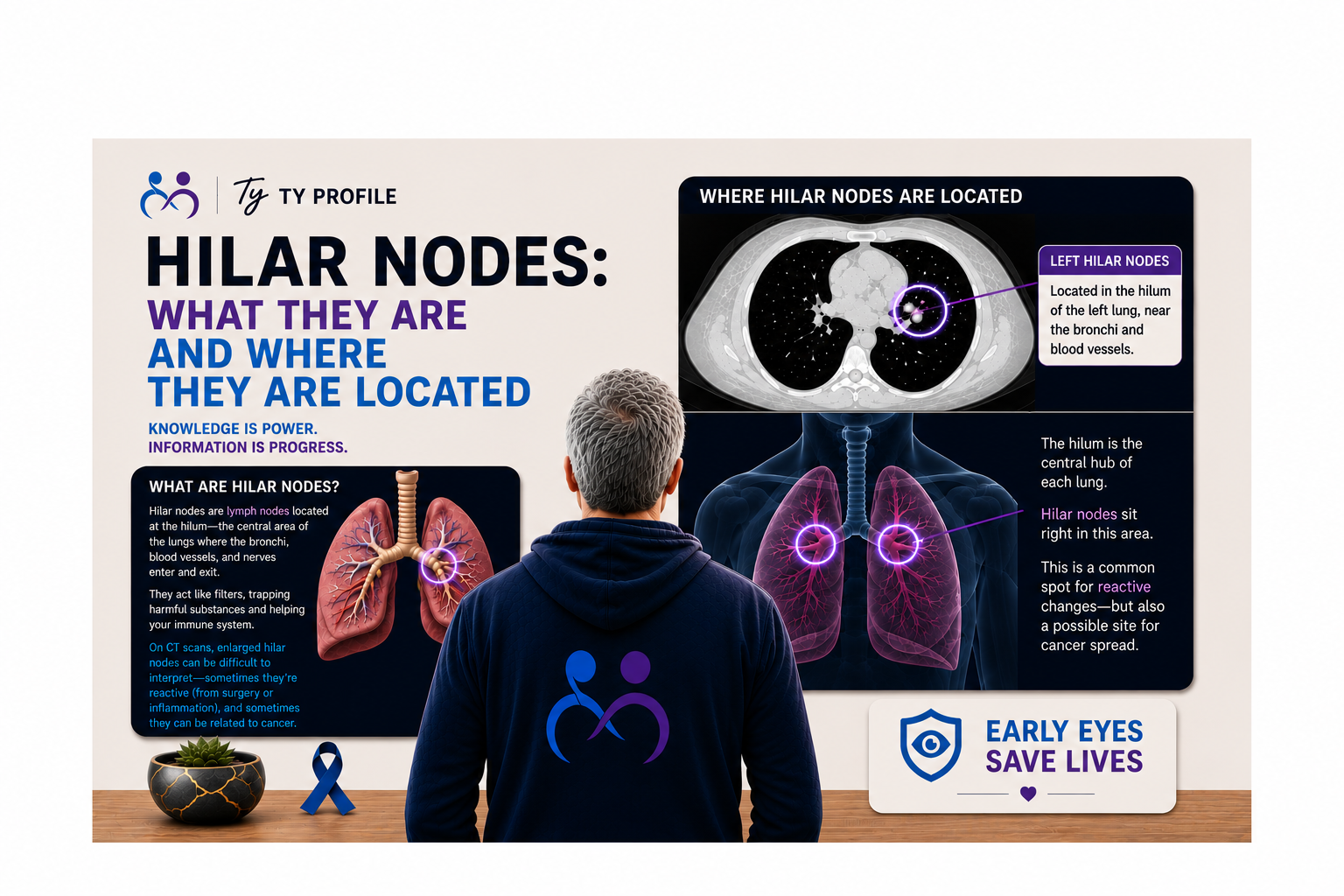
We are tracking PSCC using CT scans. We have seen the PSCC get to the left lung (left lobe) and a nearby lymph node. This new CT seems to suggest all the PSCC in the lung has been resected. At the same time, the report puts a cautionary focus on the hilar nodes in the central area of each love. Small changes are noted, but these changes are “indeterminate” meaning the CT is not returning enough information to say this is inflammation or metastasis of PSCC. This points to the need for very close attention to this area, through Signatera assays and frequent imaging. I will develop questions from this report for the Thoracic Surgeon and my Oncologist.
The encouraging part of this CT report is not just what was seen—but what was not seen. The report states there is “no convincing evidence of residual or recurrent neoplasm” along the surgical margin where the left lower lobe metastasis was removed. There are also no new suspicious lung nodules or masses, and no evidence of disease below the thoracic region. Big picture, that matters. After everything that has happened over the past year, I do not take that lightly for even a second. My “bits down there” remain safe for now, which is very good news. Reading through this report, I do not see giant red warning flags suddenly going up flag poles. I see a scan that is cautious, watchful, and focused on continued surveillance rather than immediate alarm.
The biggest unresolved question in this scan involves the left hilar lymph nodes. These are lymph nodes located near the central structures of the lung where the bronchi and major blood vessels enter. The report describes them as “mildly enlarged” and “indeterminate”, meaning the radiologist cannot confidently say whether the changes are simply reactive from surgery and healing, or whether they could represent nodal metastatic disease. One reassuring detail is that these nodes did not show FDG uptake on the recent PET scan, which lowers concern but does not completely eliminate it. What I take away from this is focus. The radiologist is essentially saying: watch the hilar nodes closely. There was a small increase in size noted, but that increase could come from post-surgical inflammation just as easily as cancer activity. For now, the lungs remain the new focal area—careful observation, close imaging surveillance, and continued attention to what happens next. I am reassured I have Signatera assays as a new and import part of my surveillance tools. My journey continues. I wish you strength and peace in your journey. Keep asking questions and advocating.
Why I Made This Graphic
I never heard the words Stage 1 or Stage 2.
By the time I switched healthcare systems and found doctors who took my cancer seriously, I was told I had Stage 3 penile squamous cell carcinoma. I remember the shock. I remember the breath leaving me. For a few long seconds, it felt like I was suffocating.
Then I was told that amputating the source of my PSCC was not enough. I would need chemotherapy. Again, I was stunned. Again, breathless.
Later, after nearly a year of believing I was cancer free, I was told I needed immediate thoracic surgery. Another wave. Another moment where I had to stop, breathe, and absorb what cancer had just thrown at me.
No more.
I am not going to stand still in the path of the PSCC hurricane waiting to see what flies at me next. I am getting on the wave instead of letting it crush me.
That is why this graphic exists.
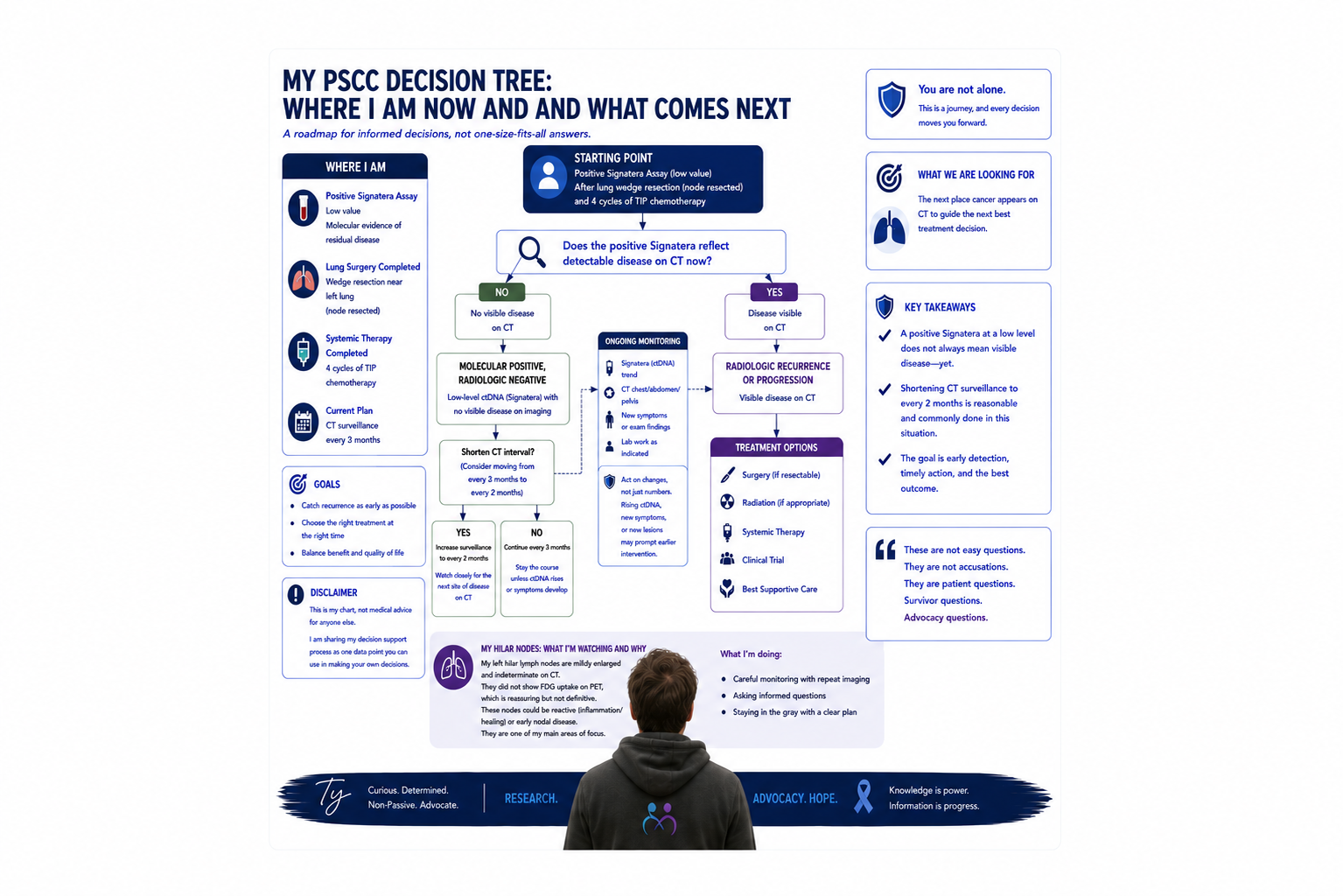
Over the past few months, I have been researching PSCC, treatment options, ctDNA assays like Signatera, surveillance strategies, radiation, immunotherapy, and the difficult timing decisions that come with recurrent or metastatic cancer. My doctors still lead my care. But I need to understand enough to ask better questions, challenge assumptions, and participate in decisions that may shape the rest of my life.
This graphic is one of my personal “war games.”
It is not a prescription. It is not a guideline. It is a thinking tool.
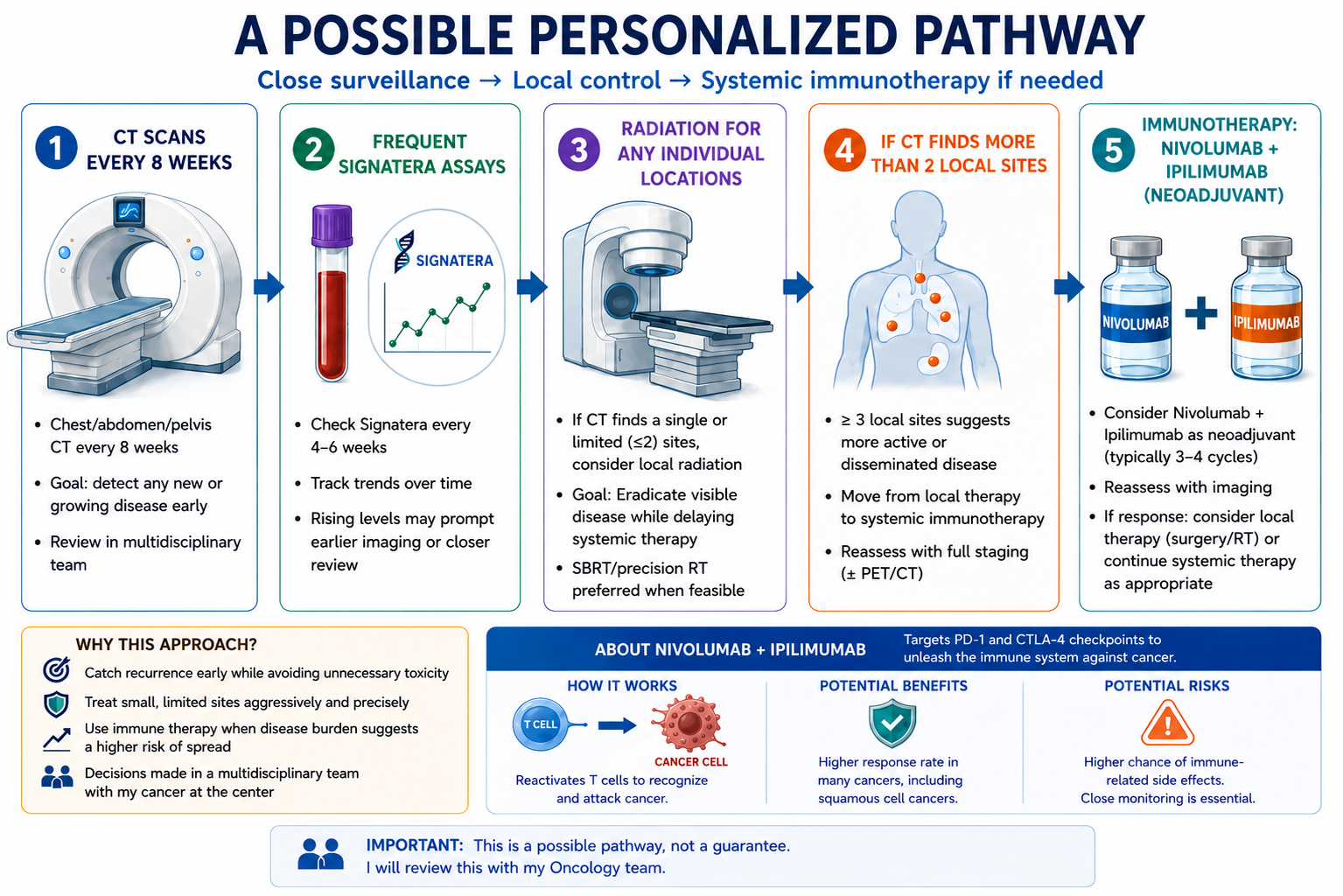
It helps me map where I am now: positive low-level Signatera, lung surgery completed, prior TIP chemotherapy, and the possibility of more cancer appearing later on imaging. It helps me think through questions like: Should CT surveillance move from every three months to every eight weeks? How often should Signatera be repeated? If one or two isolated sites appear, could radiation be used for local control? If more sites appear, when do we shift toward systemic therapy such as immunotherapy?
Making the graphic helped me understand the difference between watching and waiting, between local treatment and systemic treatment, between adjuvant and neoadjuvant therapy, and between fear-driven decisions and data-informed decisions.
Why share something so specific to my situation?
Because every cancer patient has to decide how informed they want to be.
For some people, being informed means listening carefully to their doctor and trusting the plan. For others, it means reading studies, asking for second opinions, talking with a partner, finding a cancer mentor, or asking the same question three different ways until the trade-offs finally make sense.
There is no single right way to do this.
But for me, being informed gives me steadier ground when the choices all feel invasive, painful, uncertain, or unfair. It helps me bring data into the room with me. It helps me understand what I am accepting, what I am delaying, and what I am fighting for.
My approach is not for everyone.
But it works for me.
And I offer it as one viewpoint for anyone else facing a rare cancer, a frightening recurrence, or a future that suddenly requires more courage than expected.
Do your best at each stage of your journey. Ask the questions you need to ask. Bring the people you trust close. Learn enough to feel present in your own care.
I wish you and your inner circle peace.
More Questions To Consider
The Person I Was Becoming
I remembered something today that I had pushed into the furthest corner of my mind.
When I was diagnosed with PSCC and told I would likely need a partial or full penectomy, I went into instant fight and flight modes at the same time. My brain could barely process what was happening.
How could the oncologist and surgeon go from seeing a painful red mass to:
“You could have six months to live if you do nothing.”
How could they drop something that enormous into my life in a single conversation?
It felt like a death sentence.
My partner reminded me today that I said:
“I would rather die than be amputated.”
I had buried that memory.
Looking back now, I realize how completely unprepared I was emotionally. My clinical team was highly skilled medically, but the experience itself was entirely clinical. They offered me radical treatment with no guarantees and almost no time to process the situation psychologically.
I was told I needed to act immediately.
And to be fair, medically, that may have been true.
But emotionally, I was collapsing under the weight of decisions I did not yet understand how to think about.
There was no counselor sitting beside me asking:
What are you afraid of most?
What does masculinity mean to you?
What are your fears about intimacy?
Who do you want beside you during this?
How do you emotionally process loss?
What questions do you need time to ask before treatment begins?
No one asked me those questions because everyone was focused on saving my life.
Again, understandably so.
But survivorship begins much earlier than most people realize.
Looking back on those first days with PSCC, I have thought about many questions I wish I had known to ask, but didn’t because the immediate threat to my life overwhelmed everything else.
Over time, I began processing those early experiences differently. I began thinking about the emotional side of survivorship, identity, intimacy, fear, and the person I was becoming after treatment.
I also slowly developed a personal philosophy that helped me think through survivorship. For me, that philosophy became Kintsugi — the Japanese art of repairing broken pottery with gold. Not because I think suffering is beautiful. And not because I think everyone should process survivorship the same way. But because Kintsugi helped me understand something important:
The fractures were not chosen.
The repair is.
What follows are the questions I wish someone had helped me ask earlier.
Not answers.
Not instructions.
And not a universal philosophy.
Just questions.
Questions I hope may help other men think more consciously about survivorship while there is still time to shape the person they are becoming.
Some men move through this with partners beside them.
Some with families.
Some with close friends.
Some mostly alone.
All of those experiences are real.
I will comment on a few of these questions using pieces of my own journey, but my main goal is to give you useful ideas to consider, discuss, reflect on, and perhaps bring into conversations with your partner, family, friends, mentors, counselors, and medical team.
And at the end, I want to talk about mentorship itself — how I eventually found a mentor, and how survivorship slowly led me toward becoming one for others.
Identity Questions
These were some of the hardest questions for me because they forced me to think beyond survival alone.
Who do I believe I am now?
What parts of myself feel interrupted?
What parts of myself remain unchanged?
What does masculinity actually mean to me?
Which ideas about masculinity came from culture, and which came from lived experience?
Am I trying to return to an earlier version of myself, or understand the person I am becoming?
What qualities do I want to strengthen during survivorship?
At first, I thought survivorship meant trying to restore normalcy as quickly as possible. Over time, I realized survivorship was asking deeper questions than that.
Not:
“How do I become who I was before?”
But:
“Who am I becoming now?”
Intimacy and Sensuality Questions
The medical system talks a great deal about function.
Far less about intimacy.
And intimacy is much larger than intercourse alone.
What does intimacy mean to me now?
What forms of closeness still matter deeply to me?
What fears do I carry around touch, sensuality, or sexuality?
What conversations feel difficult to begin?
What would I want a partner to understand about my fears?
How do I define sensuality beyond intercourse?
What forms of emotional connection still feel healing?
These questions matter whether someone has a partner or not.
Because even men who are alone still carry questions about identity, closeness, vulnerability, and how they wish to emotionally reconnect with the world after treatment.
I think many men silently assume these conversations are no longer available to them after treatment.
I no longer believe that is true.
Emotional Questions
Men are often expected to move quickly into endurance mode.
Treatment.
Recovery.
Next scan.
Next appointment.
But emotional processing moves differently.
What emotions am I avoiding?
What am I grieving?
What fears feel hardest to say aloud?
Am I allowing myself emotional honesty?
What parts of this experience changed how I see mortality?
Where do I still feel shame?
What would compassion toward myself actually look like?
One of the strangest parts of survivorship is realizing you can survive medically while still feeling psychologically fractured.
That realization is not failure.
It is awareness.
And awareness may be where repair begins.
Relationship Questions
Some men move through cancer with strong support systems.
Others do not.
Neither experience is morally superior.
Neither determines the value of survivorship.
But relationships often become emotionally clearer during illness.
Who helps me feel seen?
Who do I trust with vulnerability?
What conversations have I postponed?
How do I want to communicate my needs?
What kinds of support actually help me?
What boundaries do I need?
How do I remain emotionally connected without pretending I am unchanged?
Cancer can alter relationships.
Sometimes painfully.
Sometimes unexpectedly.
Sometimes beautifully.
And sometimes survivorship involves learning how to remain emotionally open even when uncertainty remains.
Survivorship Questions
This may be the category I think about most now.
What kind of survivor do I want to become?
What values matter more to me now?
What deserves more attention in my life?
What have I stopped postponing?
What am I learning from uncertainty?
What deserves deliberate rebuilding?
What fractures do I hide?
Which ones deserve light instead?
Kintsugi became meaningful to me because it reframed repair itself.
The gold veins are intentional.
They take time.
Patience.
Reflection.
Deliberate effort.
The repair is not pretending the fracture never happened.
It is choosing not to abandon the object because it fractured.
I think survivorship can work that way too.
Medical Advocacy Questions
I also wish someone had encouraged me earlier to become a more active participant in survivorship itself.
Not combative.
Not distrustful.
But informed.
What questions should I ask earlier?
Am I fully informed about surveillance options?
Do I understand recurrence risks?
What emotional effects should I expect from treatment?
Have intimacy and sexuality been discussed openly?
What support resources exist?
Is there an oncology social worker available to speak with?
What quality-of-life questions have not been discussed?
Am I participating actively in survivorship decisions?
One of the most important things I learned during my journey was that resources sometimes exist quietly in the background until we begin asking enough questions to uncover them.
That happened to me with an oncology social worker who became an important part of my survivorship journey.
I did not even know to ask about that kind of support early on.
But once I found it, it changed things for me emotionally in ways I did not expect.
I plan to write much more about that experience — and about my ongoing search for resources, support systems, mentors, and survivorship tools — in a future blog entry.
For now, I simply want to encourage other patients to ask:
“What support resources exist beyond treatment itself?”
Sometimes one question opens a door you did not know was there.
Many of my recent writings about surveillance, biomarkers, ctDNA, Signatera, Tempus, recurrence, and the space between scans come from this same realization:
Survivorship cannot always remain passive.
Sometimes we need to consciously participate in it.
Mentorship
One of the unexpected parts of my journey was mentorship.
At first, I desperately needed someone who had already walked ahead of me.
Someone who could translate fear into language.
Someone who could sit outside the clinical system and simply say:
“I understand.”
Eventually, I found that.
And slowly, without fully realizing it, I also became that person for other men.
That may be one of the quietest but most meaningful parts of survivorship:
the moment suffering becomes usable in service of another human being.
Not to erase fracture.
Not to romanticize pain.
But to help another man feel less alone while he begins shaping the person he is becoming.
The fractures were not chosen.
The repair is.
— Ty

Sexuality & PSCC
Sexuality After Penile Cancer Surgery: The Conversations We Avoid
One of the hardest things about penile cancer is that the surgery/treatments may save your life—while also changing the way you see yourself, your body, intimacy, and your relationships. If can deeply impact partners.
I could not get my urology/oncology surgeon to discuss what he called life style issues. He listened to me ask questions, but he seemed determined not to discuss anything beyond surgeries. I found that same reluctance in other doctors. We live in a world where medicine is being removed from humanity, and is guided more by money, insurance, time slots, government direction and other external demands.
The whole person does not have a role in many exam rooms today.
A small but important study titled Sexuality in Surgically Treated Carcinoma Penis Patients and Their Partners looked directly at what patients and their partners experienced after partial or total penectomy. What stood out to me wasn’t only the physical changes. It was the emotional silence surrounding them.
The study found that many patients still had sexual thoughts, desire, emotional attachment, and the need for closeness. What often changed was confidence, satisfaction, body image, and anxiety around performance.
That distinction matters.
Because sexuality is not the same thing as intercourse.
The study repeatedly points toward something larger:
touch, intimacy, closeness, communication, emotional connection, reassurance, attachment, and being wanted still matter deeply after surgery.
For many patients, the fear was not simply “Can I have sex?”
It was:
Will my partner still see me the same way?
Will I still feel masculine?
Will intimacy become awkward or disappear entirely?
Can I still experience pleasure or orgasm?
Why is nobody talking to me about this?
The study also looked at partners — something rarely discussed in PSCC literature.
Partners can experienced grief, uncertainty, reduced sexual satisfaction, and emotional strain of their own. But interestingly, many relationships remained emotionally intact even when sexuality changed. Couples often adapted over time and found new forms of intimacy that were not centered entirely around intercourse.
That may be one of the most important findings in the paper.
Not because it minimizes loss—but because it acknowledges that intimacy is more adaptable, human, and emotionally layered than ‘medicine’ sometimes recognizes.
The Questions Patients May Not
Realize They Are Allowed To Ask
A recurring theme in this study was lack of counseling.
Many patients entered surgery without detailed discussions about:
orgasm
sensation
intimacy
body image
sexual adaptation
partner adjustment
psychological support
realistic expectations after surgery
That needs to change.
This mirrors my experience. I felt like I received a death sentence in place of a diagnosis—that’s how clinically cold my first Oncologist and Urology/Oncology Surgeon were. My partner just reminded me of something I said and have probably been blocking from my memory. When told about the amputation of my penis I said “I would rather die.” That was the first, instantaneous emotion that gripped me.
It took time, months after treatments, for me to see the small room I felt trapped in actually had a door that was cracked open, with a sliver of light coming through.
From being whisked through diagnosis into surgeries—I felt like I was a number, a place holder, another notch carved in a medical scoreboard. I use the word ‘carved’ purposely—I felt like my partial and full penectomies were just events for the surgeon to cut me with no consideration for me beyond that. His follow up treatment was impersonal, deeply painful and he showed his lack of respect for two female doctors that are developing reconstructive techniques. In your journey, look a little deeper into your doctors—understand them as people, not just your assigned medical providers.
My experiences with my original surgeon caused me to feel sadness, anger, additional raw pain (beyond the surgeries) and confusion while I was supposed to be healing.
That was my experience. My partner was there for all this.
It was painful then and it’s painful to process it and write about it now.
We need to organize men and their loved ones and demand more wholistic medical care. We need to educate the medical community about our needs as human beings. I needed them to be there of me—all of me—and they were not. I sincerely hope your experience is better than mine. I want to add I advocated and found a new reconstructive urology team and urology oncologist—and they are amazing.
Below are some questions I believe patients and partners should feel fully entitled to ask. You can think of additional questions.
Questions Patients May Want To Ask Their
Medical Team Before Surgery
How might this surgery affect intimacy and sexuality?
What changes are common after partial penectomy?
What changes are common after total penectomy?
Can orgasm still occur after surgery?
What kinds of sensation may remain?
Will there be penile tissue left after a full penectomy, and what sensations might occur, once I my healing has progressed?
Are there nerve pathways or areas that may still provide pleasure?
What emotional reactions do patients commonly experience afterward? Upon waking up from surgery, and later?
How often do patients struggle with anxiety or body image changes? What was effective ways to support patients at this time? Where are the resources?
What support exists for sexual rehabilitation? At my hospital; at other hospitals; globally? Are there doctors like Dr. Anger and Dr. Lewis at UCSD in San Diego, California that are pioneering treatment, procedures and support for patients?
Questions About Recovery
When does intimacy usually resume?
What forms of sexual activity remain possible?
What should I realistically expect emotionally during recovery?
Is counselling or sex therapy available?
Are there support groups for penile cancer survivors?
How well do patients usually adapt over time?
Questions About Relationships
Should my partner attend counselling visits with me?
What emotional challenges do couples commonly face?
How do couples navigate fear, embarrassment, or avoidance?
What resources exist specifically for partners?
Who do we talk to if we have questions about possible reconstruction, and where are there doctors doing reconstructive surgeries?
Questions About Mental Health
Is it normal to feel grief, shame, anxiety, or loss? How intense can these feelings be?
How often do patients struggle psychologically after surgery?
When should I seek professional mental health support?
Are there therapists experienced with cancer-related sexuality concerns?
If the first therapist I talk to is not providing me answers or developing my trust, may I go to a different therapist?
Questions Partners May Want To Ask
Partners may carry their own uncertainty, either openly or silently.
Some questions partners may wish to ask include:
How can I support my partner without making them feel pressured?
What emotional reactions are common for partners after surgery?
How can we rebuild intimacy gradually? Gracefully?
What kinds of physical closeness may feel reassuring?
How do we communicate about fear or embarrassment?
Are there counselling resources for couples specifically?
The Conversation Medicine Still Struggles To Have
Penile cancer treatment understandably focuses on survival.
But survival alone is not the entire story.
Patients also carry:
identity
dignity
confidence
relationships
touch
vulnerability
fear
hope
and other feelings
And these deserve supportive medical attention too. Realistically, how much support will there be, or not be? What is reasonable to expect?
One sentence from the study stayed with me:
Sexuality is more than intercourse alone.
That may sound obvious. But I now see this as a door to open. For me, there is room beyond that door to explore with my partner.
Medical professionals have an opportunity to significantly improve outcomes of life-saving procedures when they include discussions and provide resources about sexuality, sensuality, and other emotional support. This may be more rare now that even this tragic cancer is—but we have to start somewhere. Start with good questions and advocate for meaningful answers.
— Ty
Reference:
Bhat GS, Nelivigi G, Barude V, Shastry A. Sexuality in Surgically Treated Carcinoma Penis Patients and Their Partners. Indian Journal of Psychological Medicine. 2018;40(6):580–586.

Byzantine, Really?
I found an abstract on Penile Cancer. I am posting it here for some historical perspective.
One of the striking things about penile cancer is how often patients feel as if they are entering a forgotten corner of medicine. PSCC is rare. The language around it is difficult. The stigma is heavy. Progress can feel slow.
That is why this historical paper is so surprising.
The authors looked back at Byzantine medical texts and found that physicians such as Oribasius of Pergamus and Paul of Aegina were already describing tumors of the glans and foreskin in remarkable detail. They used the term “thymi” for fleshy growths on the penis and distinguished between benign and malignant forms. They understood that some lesions could be removed locally, while others behaved more aggressively, bled, recurred, or worsened after being cut.
What stands out is that these physicians were not simply performing radical removal. They described local excision of penile tumors, followed by burning with cautery or caustic substances to reduce relapse. In modern language, this resembles a form of penile-preserving surgery with adjuvant local treatment — remove the tumor, then treat the margin or surface to lower the risk of recurrence.
The paper’s strongest point is historical and human: what we now call organ-preserving treatment was not invented only in the modern era. Byzantine surgeons were already trying to treat penile tumors while preserving as much of the organ as possible. They even warned against treating internal and external foreskin lesions at the same time because the tissue was thin and could be damaged or perforated. That detail shows a practical surgical awareness that feels unexpectedly modern.
The authors also note that Paul of Aegina recognized features of malignancy and described cancer as rough, uneven, darkish, painful, sometimes ulcerated, and capable of spreading. He also discussed hardened glands in the groin, neck, or armpits and recognized that painful malignant glands were difficult to treat surgically. For PSCC patients today, that matters because lymph nodes remain one of the most important parts of staging, risk, and treatment planning.
For me, the lesson is not that ancient medicine was better than modern oncology. It wasn’t. Modern pathology, imaging, chemotherapy, immunotherapy, genomic testing, sentinel lymph node biopsy, and reconstructive surgery have changed what is possible.
The lesson is different.
Even centuries ago, physicians understood something we are still fighting for today: penile cancer care should not begin with shame, silence, or automatic disfigurement. It should begin with careful observation, early treatment, preservation when possible, and respect for the whole person.
That is the thread connecting Byzantine surgery to modern PSCC advocacy.
The tools have changed.
Patient’s needs have not. Respect, care, minimize waiting, prioritize effective treatment and follow on surveillance.
ABSTRACT SOURCES: https://pubmed.ncbi.nlm.nih.gov/26011363/
A Window ‘tween Scans
I am having an epiphany, or maybe a rapid evolution in my journey.
Not the kind that arrives with certainty. The kind that arrives with a question, or five.
What if the most important part of cancer surveillance is not only what we can see, but what we can learn before we can see it?
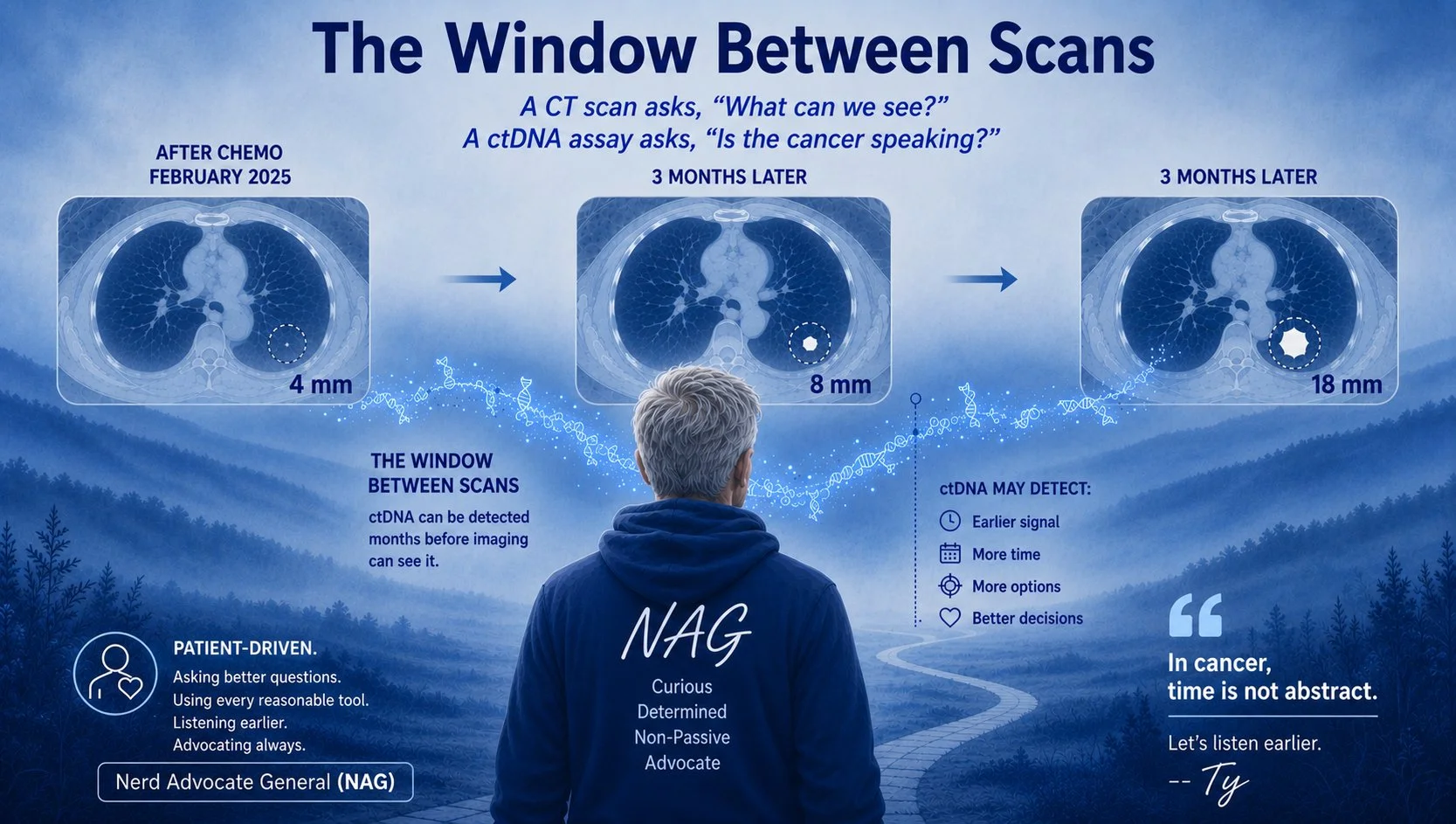
After chemotherapy ended in February 2025, I had my first CT scan. There was a 4mm spot in my lung. Small. Watchable. The kind of thing that can be described carefully, cautiously, almost quietly. Maybe a common infection I was told.
Three months later, it was 8mm. My alarms went to DEFCON 1.
Three months after that, it was 18mm. DEFCON 3.
That is the part I keep returning to. My 1st PSCC staging was Stage 3! Feels like that!
I feel things returning—not with anger. Not exactly. More with the strange clarity that comes after I have lived through something once and I began to understand where the hidden doors were. The things no one tells you, things not neatly on a list or pamphlet.
But I will tell you, I will tell you my experience so you can ask better questions.
At 8mm, could we have done more? Could I have done more?
Could we have biopsied it?
Could we have used that biopsy tissue—or tissue already stored from my original cancer—to build a tumor-informed Signatera Assay?
Could a blood test have given us an earlier signal?
Could it have bought time?
These are not easy questions. They are not accusations. They are patient questions. Survivor questions. Advocacy questions.
Circulating tumor DNA, or ctDNA, is one of the most powerful ideas I have encountered in modern cancer care. I find the concept poetic: a tumor can leave traces of itself in the blood before it is large enough to command attention on a scan. It’s saying “HEY, I’M HERE!”
A CT scan asks, “What can we see?”
A ct DNA assay asks, “Is there evidence the cancer is speaking?”
That difference matters.
Signatera is a tumor-informed assay. It is built around the genetic fingerprint of a person’s own cancer. Once the assay is designed, it can be followed over time with blood draws. It does not replace scans. It does not replace pathology. It is not magic. A negative result does not promise that cancer is gone forever. NOTE: I have been reviewing false-positives and false-negatives for Signatera assays (in non-PSCC cancers).
But a positive result can be a signal flare. My first Signatera signal flare is in the air now.
And in cancer, time is not an abstract thing.
Time can mean a smaller tumor because we are finding it sooner.
Time can mean more treatment options. And a better outcome.
Time can mean the difference between watching and acting.
What I am learning in 2026 is that survivorship cannot be passive. It cannot only mean waiting for the next scan and hoping the images are clear and kind.
Survivorship also means asking whether we are using every reasonable tool available—especially when the cancer is rare, aggressive, or poorly studied.
PSCC patients do not have the luxury of massive data sets.
We do not always have clear road maps.
That makes better surveillance more important, not less.
I keep thinking about the space between 4mm and 18mm. The space between “too small to know” (aka indeterminate) and “large enough to prove.” The space where I had to sit with uncertainty while my biology kept moving.
That space deserves more attention.
Maybe the answer is not always biopsy. Maybe sometimes the nodule or node is too small, too risky, or too hard to reach. Maybe the tissue is insufficient. Maybe the assay cannot be built. Maybe the ct DNA is negative even when disease is present.
All of that can true.
But the questions still matter.
At 8mm, when a lung nodule has doubled after treatment for PSCC, should we be asking only, “When is the next scan?”
Or should we also be asking: Can we get tissue?
Can we build a ct DNA assay?
Can we monitor every eight weeks instead of twelve weeks?
Can we detect molecular recurrence before radiographic recurrence? And why did we conduct a Tempus Assay last year and not a complimentary Signatera Assay?
Can we move sooner, while the window is still open? You’ll see me more informed and advocating with data to support my case.
I do not want to turn my story into hindsight alone.
I want to turn it into a better question for the next patient, whether PSCC-positive or positive for any other rare cancer.
We are living in the midst of powerful prognostic tools. Tools that can sometimes hear cancer before imaging can see it. And if those tools exist, patients deserve to know when they might help, when they might not, and why they are or are not being used. That’s my initial two cents on the ethical side of this—at least for highly informed patients that grok their own situations.
My journey in 2026 is not only about treatment.
It is about learning how to ask sharper questions.
It is about not confusing caution with inaction.
It is about looking at the liminal space between scans and saying: Something may be happening here.
Let’s listen earlier.
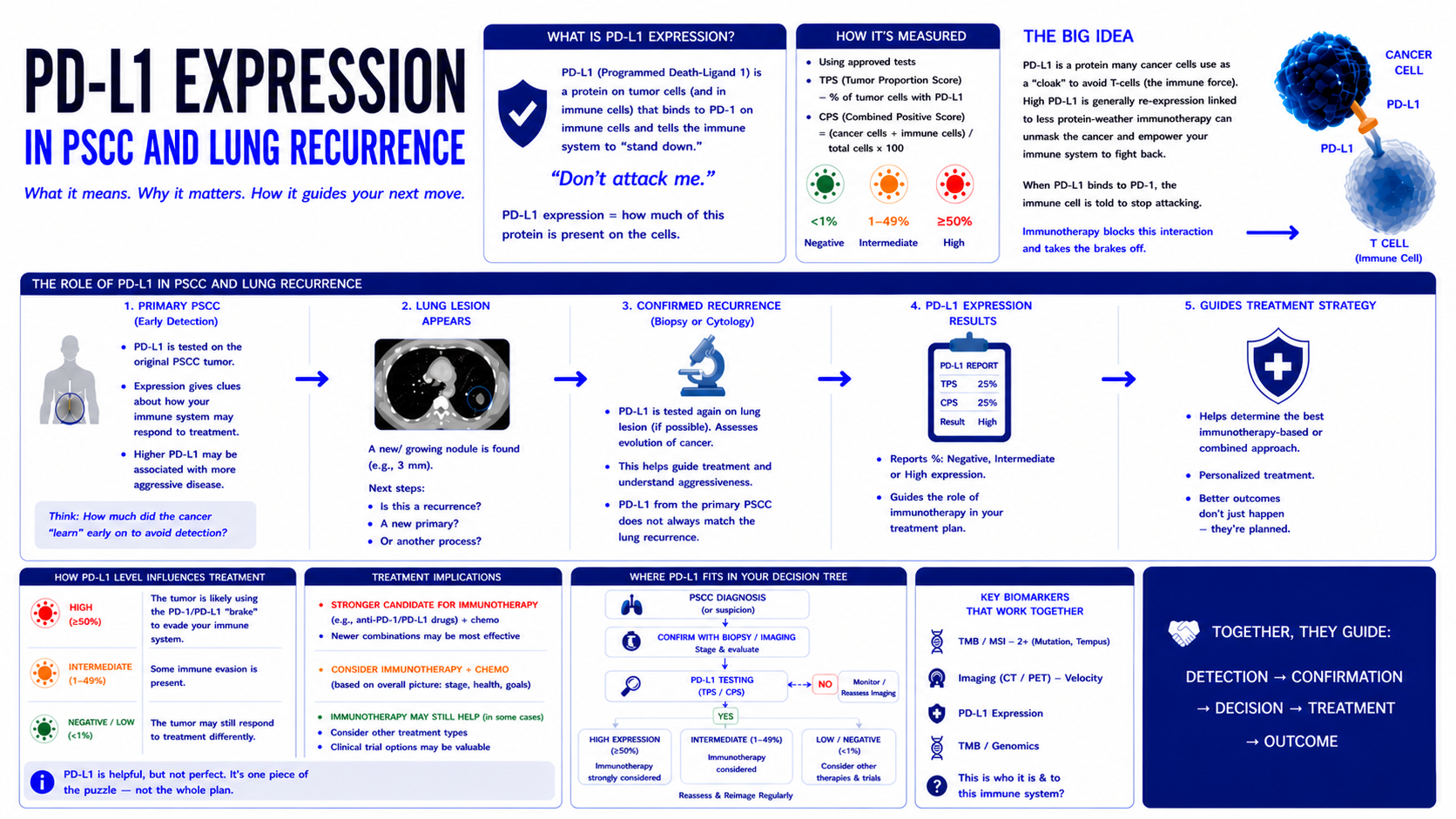
PD-L1—A Doorway
A doorway, not a promise.
PD-L1 stands for programmed death-ligand 1.
It is a protein that can appear on some cancer cells and some immune cells. In normal biology, PD-L1 helps keep the immune system from attacking healthy tissue too aggressively.
But some cancers can use that same signal as a shield.
PD-L1 can bind to PD-1 on T cells — immune cells that help recognize and attack threats. When that connection happens, the immune response may slow down.
In plain language, the cancer may be sending a message that says:
“Don’t attack me.”
Immunotherapy drugs that target the PD-1/PD-L1 pathway are designed to interrupt that signal.They do not attack cancer in the same direct way chemotherapy does. Instead, they may help the immune system recognize and respond to cancer cells that were hiding behind that brake.
PD-L1 is not the whole map.
It is one signal — one clue — that can help guide the next treatment conversation.
Why PD-L1 Matters in PSCC
Penile squamous cell carcinoma, or PSCC, is rare.
Because it is rare, treatment decisions often depend on a careful combination of information: imaging, pathology, biopsy, molecular testing, clinical judgment, and the patient’s goals.
PD-L1 expression may help doctors ask an important question:
Is this cancer using an immune-escape pathway?
If the answer is yes, immunotherapy may become part of the conversation.
That does not mean PD-L1 is perfect.
A high PD-L1 result does not guarantee immunotherapy will work.
A low PD-L1 result does not always mean immunotherapy cannot help.
And PD-L1 does not replace biopsy, imaging, genomics, or the larger clinical picture.
It is one piece of the puzzle.
Why Testing May Need to Happen Again
A primary PSCC tumor and a lung lesion may not tell the exact same story.
Cancer can change over time. It can evolve under treatment pressure. It can behave differently in a metastatic site than it did in the original tumor. This what I have been learning this weekend. Again, do not take this as medical advice, it’s not. It’s my best effort to grok what is happening to me and be as ready as I can to work with my medical team.
That is why, when possible, doctors may want tissue from the new lesion — through biopsy or cytology — rather than relying only on the original tumor. My lung tissue was sent to Natera for this reason.
The question is not only:
What was the cancer before?
The question becomes:
What is the cancer doing now?
If a lung lesion is confirmed as recurrence, PD-L1 testing may help describe part of the biology of that recurrence. It may help guide the discussion around immunotherapy, chemotherapy, combination treatment, clinical trials, or other options.
How PD-L1 Is Measured
PD-L1 is usually measured on tumor tissue.
Reports may describe the result in different ways, including:
TPS — Tumor Proportion Score
This estimates the percentage of tumor cells showing PD-L1 expression.
CPS — Combined Positive Score
This includes PD-L1 expression on tumor cells and certain immune cells.
A report may describe PD-L1 as negative, low, intermediate, or high depending on the cancer type, test used, scoring system, and clinical context.
The exact meaning of a PD-L1 result should always be interpreted by the oncology team.
High, Intermediate, or Low Does Not Mean Simple
It is tempting to read PD-L1 like a traffic light.
High means go.
Low means stop.
Intermediate means maybe.
But cancer rarely speaks that cleanly.
A higher PD-L1 result may suggest that the tumor is using the PD-1/PD-L1 pathway to avoid immune attack. In some cancers, higher PD-L1 expression can be associated with a greater chance of response to checkpoint inhibitor therapy. I will ask this question at my next Oncology appointment.
But PD-L1 is an imperfect biomarker.
Some people with high PD-L1 do not respond.
Some people with low or negative PD-L1 still benefit.
That is why PD-L1 should not stand alone.
It belongs beside other pieces of information:
Imaging — What is growing? How fast? Where?
Biopsy or cytology — What is my lesion?
Genomic testing — What mutations or alterations are present? I believe this is where my Tempus Assay may shed light.
MSI-H / dMMR and TMB-H status — Are there broader signs that immunotherapy may be useful?
Clinical condition and goals — What treatment makes sense for me, not just the tumor? We have to assess past treatment’s side effects, including the ones that are cumulative like my neuropathy.
My Lung Recurrence Question
When PSCC moved to my lung, everything became more urgent — and also more precise (the additional wedge of nodes, the Tempus and Signatera assays…). I intuitively felt this as we quickly moved ahead with my lung tumor (seen over multiple times on scans). GRRRRR! My labs were finished in just a few hours after the needle stick.My thoracic surgery consult was schedule ASAP! I was offered lung surgery ASAP!
A lung nodule is not automatically one thing like I originally assumed.
It may be recurrence, we found out mine is/was. We hoped I would have an original lung cancer (aka a new primary cancer), but my tumor (and the adjacent node) were PSCC.
A lung nodule may be something else entirely.
Imaging (CT) can raise a concern, but a tissue sample often brings the clearest answer once pathology sees it. NOTE: My node in the wedge was not seen in the CT. CT scans “see” structure, like millions of cancer cells. While my node was hidden, it may have had a large number of cancer cells, just not enough for the CT to resolve.
If and when recurrence is confirmed, then PD-L1 testing becomes one part of understanding the current disease.
It asks:
Is this recurrence showing signs of immune escape? I need to learn more about this.
Could immunotherapy be part of the plan? And if so, what are the next questions? Which one(s)? How long? Chemo?
Do my lung lesion and the original PSCC match, or has the biology shifted? I need to wait to learn this.
Those questions matter because treatment is not just about attacking cancer. It is about choosing the right tools for the cancer that exists now. Also, I learned yesterday (from a breast cancer YouTube seminar) that some cancers can develop resistance, so that has to be part of the decision process.
The Big Idea
PD-L1 is not the whole map.
It is one marker. One signal. One clue.
But in a rare cancer like PSCC — especially when recurrence reaches the lung — clues matter.
My research so far suggests PD-L1 testing can help show whether the cancer may be interacting with the immune system in a way that could be targeted. If so it MAY help support a more personalized treatment discussion. And it can sit beside other tests, including imaging, biopsy, genomic profiling, MSI/MMR status, TMB, and clinical assessment.
Our goal is not just to collect data. That is just the phase we have been in since thoracic surgery.
The goal is to turn uncertainty into direction.
Detection leads to confirmation.
Confirmation leads to decision.
Decision leads to treatment.
And treatment, when carefully chosen, gives the next step a name.
- Ty